TL;DR- A Rental Inspection Report Canada creates a legally binding record of a property condition to prevent future financial disputes.
- Provincial laws often require a joint walkthrough at the start and end of every tenancy to protect security deposits.
- Using an Online Rental Inspection Report allows for time stamped photos and digital signatures that hold up in legal hearings.
- Documenting minor pre-existing issues protects tenants from being held liable for damage they did not cause.
- Proactive inspections help landlords identify maintenance needs early, which preserves the long term value of the investment.
- You can create a comprehensive rental inspection report using Ziji Legal Forms' online template
Introduction: Ensuring Transparency in Rentals
The Canadian rental landscape is currently defined by a need for higher transparency and professional documentation. Whether you are managing a single unit in a growing city or a large portfolio, the relationship between a landlord and a tenant depends on clear expectations. A Rental Inspection Report Canada is the cornerstone of this relationship because it establishes an objective baseline for the physical state of the home. This document ensures that both parties agree on what the unit looks like before any belongings are moved inside. In an era where rental disputes can be costly and time consuming, having a clear record is the best way to maintain peace of mind.
Why a Rental Inspection Report Matters
Understanding the value of a Rental Inspection Report Canada requires looking at it as a mutual insurance policy. It is not just a list of features: it is a legal tool that governs how security deposits are handled and how maintenance is prioritized. Without this document, the transition between tenants can become a source of significant stress and financial risk.
Preventing Disputes
The primary cause of friction during a move out is the disagreement over what constitutes damage versus normal wear and tear. A Rental Inspection Report Canada solves this by providing the before picture that is compared to the after state. By agreeing on the condition of the floors, walls, and appliances at the start, there is no room for he said she said arguments later on. This clarity is essential for a smooth handover.
Legal and Financial Protection
In many Canadian provinces, a landlord who fails to complete a move in inspection may actually lose the legal right to claim against a security deposit for damages. This makes the Rental Inspection Report template a vital financial document. For tenants, the report acts as a waiver of liability for any scratches or stains that were already present. Both parties are financially protected by the existence of a signed and dated record.
Promoting Maintenance and Accountability
A thorough inspection encourages everyone involved to be more accountable. Tenants are often more careful with a property when they know its exact condition has been recorded. For landlords, the process of filling out a Rental Inspection Report Canada provides a chance to find small issues like loose hinges or slow leaks. Addressing these problems immediately prevents them from escalating into structural damage or expensive emergency repairs.
When to Use a Rental Inspection Report
Timing is everything when it comes to property documentation. While many people think of inspections only at the very start or end of a lease, there are several key moments during a tenancy where a status update is necessary to protect the property.
Before Move-In
The most important time to use a Rental Inspection Report template is right before the tenant takes possession. Ideally, the unit should be entirely empty to ensure that every corner of the carpet and every inch of the walls is visible. This walkthrough should happen on the day the keys are handed over or shortly before. It ensures the tenant is satisfied with the cleanliness and safety of their new home.
During the Tenancy
Periodic checks are a standard part of professional property management in Canada. Most provincial laws allow landlords to enter for a routine inspection provided they give at least twenty four hours of written notice. These visits are usually scheduled every three to six months. They allow the landlord to verify that the tenant is following the lease terms and that no new maintenance issues have appeared since the move in date.
Before Move-Out
The move out inspection is the final comparison that determines the fate of the security deposit. This should happen once the tenant has removed all their belongings and cleaned the unit. By walking through the space together with the move in report in hand, both parties can identify any new damage that occurred during the residency. This is the time to agree on any necessary deductions to avoid a trip to a tribunal.
After Maintenance or Renovation
Whenever significant work is done on a unit, a quick inspection is a smart move. If a contractor has been inside for a week to renovate a kitchen, you want to ensure that they did not accidentally damage the flooring or the surrounding walls. Using a Rental Inspection Report Canada after a renovation creates a new baseline for those specific areas. It ensures that the investment in the home is being respected by both workers and residents.
What to Include in a Rental Inspection Report
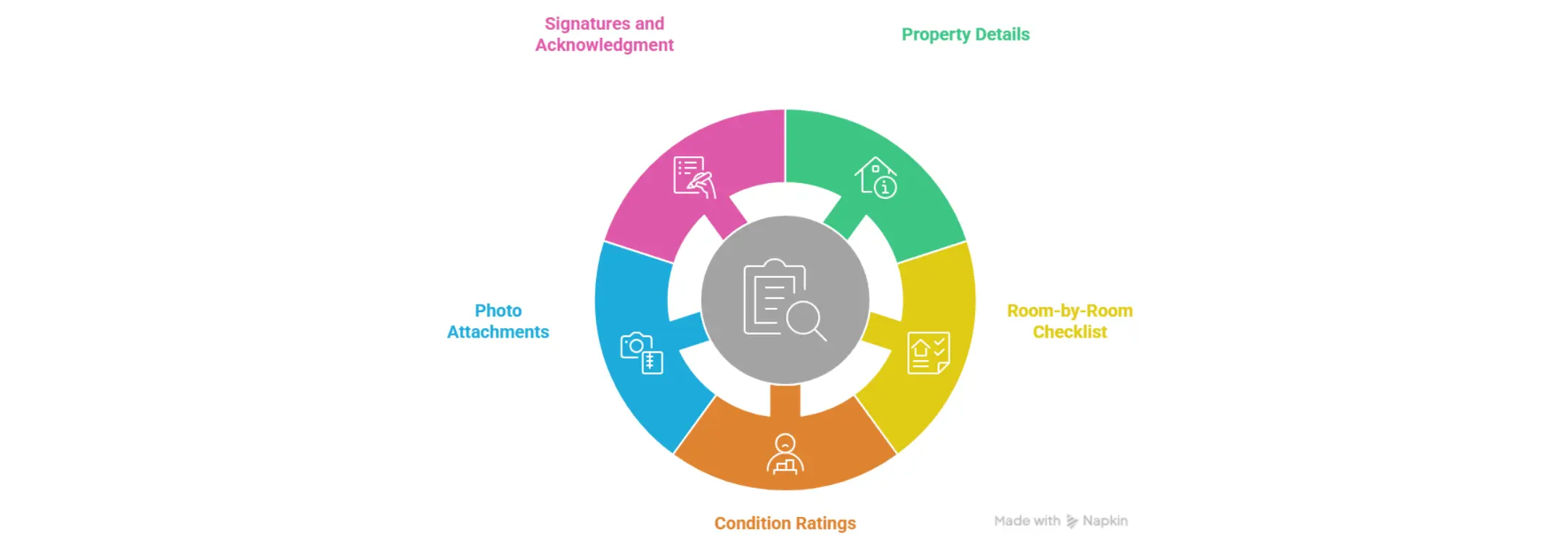
A comprehensive report needs to be more than a simple checklist. It should be a detailed narrative and visual record of the entire premises. Using a standardized Online Rental Inspection Report ensures that you never miss a room or a critical safety feature.
Property Details
Every report must begin with accurate identifying information. This includes the full street address, the unit number, and the specific date of the walkthrough. It is also important to list the names of everyone present during the inspection. This provides a clear chain of evidence if the document is ever needed during a legal dispute or an insurance claim.
Room-by-Room Checklist
The heart of the report is a systematic tour of the interior and exterior. Every room, from the kitchen to the laundry area, should have its own section. You should check the condition of floors, ceilings, and windows in every space. Do not forget to test the functionality of light fixtures, electrical outlets, and plumbing. A good checklist ensures that even the smallest details, such as the condition of window screens, are recorded.
Condition Ratings
Instead of just checking a box, you should use a consistent rating system. Ratings such as New, Good, Fair, or Poor allow for more objective descriptions. If a wall has a scuff mark, you can mark it as Fair and add a specific note about the location of the damage. This level of detail makes it much easier to decide if a unit has truly deteriorated during a tenant stay.
Photo Attachments
In the modern rental market, a written description is often not enough. High resolution photographs are a non negotiable part of a professional Rental Inspection Report Canada. You should take photos of every room, including the insides of appliances and the corners of bathrooms. Digital photos are particularly useful because they are automatically time stamped, which provides irrefutable proof of the unit state at a specific moment in time.
Signatures and Acknowledgment
A report is not legally binding until both the landlord and the tenant have signed it. By signing, the tenant acknowledges that the descriptions are an accurate representation of the property. If the tenant disagrees with a specific point, they should be given space on the form to write their own comments. Once signed, a copy must be provided to the tenant within the legally required timeframe, which is usually between seven and fifteen days.
Benefits for Landlords and Tenants
The inspection process is often seen as a chore, but it provides significant advantages to both sides of the lease agreement. It fosters a professional environment where rights are respected and property is valued.
For Landlords
For a property owner, the report is the primary way to protect the value of the asset. It provides the evidence needed to recover costs for negligent damage. Beyond just financial recovery, it helps in maintaining the property in peak condition, which allows for higher rent and better insurance terms. Regular documentation also demonstrates to authorities that the landlord is meeting all health and safety standards required by law.
For Tenants
For a resident, the report is their best defense against unfair claims. It ensures they are not charged for a pre-existing stain or a broken door handle that was there when they arrived. Having a documented walkthrough also ensures that the landlord is aware of any repairs that need to be made. This can lead to a more comfortable living experience and a faster return of the security deposit at the end of the tenancy.
Common Mistakes to Avoid in Rental Inspections
Even with a good Rental Inspection Report template, simple errors can undermine the legal validity of the document. Being aware of these common pitfalls will help you maintain a professional and compliant management style.
Skipping the Joint Review
One of the biggest mistakes is for a landlord to do the inspection alone. While a solo report is better than nothing, a joint review is much more powerful. When both parties walk through the unit together, they can discuss and agree on findings in real time. This eliminates surprises and makes it much harder for a tenant to claim later that they were not aware of the reported issues.
Forgetting Signatures or Dates
A document that is not signed and dated is essentially useless in a legal setting. It is easy to get caught up in the excitement of move in day and forget this final step. You must ensure that both the landlord and the tenant sign the report before any boxes are moved. If an Online Rental Inspection Report is used, the system will often prevent the file from being saved until all required signature fields are completed.
Ignoring Photographic Evidence
Some people believe that a few handwritten notes are enough to document a home. However, photos provide a level of detail that text cannot capture. Failing to take pictures of floors, walls, and appliance interiors is a major oversight. Photos act as the ultimate tie breaker if there is a dispute over the severity of a scratch or a stain. Always include a comprehensive set of photos with every report.
Overlooking Minor Damage
It is tempting to ignore a small chip in the paint or a tiny tear in a screen during a move in walkthrough. However, minor issues can grow over time. If you do not record a small scuff at the start, you cannot fairly charge for a larger hole in the same area later. Documenting every imperfection, no matter how small, ensures that the baseline is as accurate as possible for future comparisons.
How to Create a Rental Inspection Report with Ziji Legal Forms
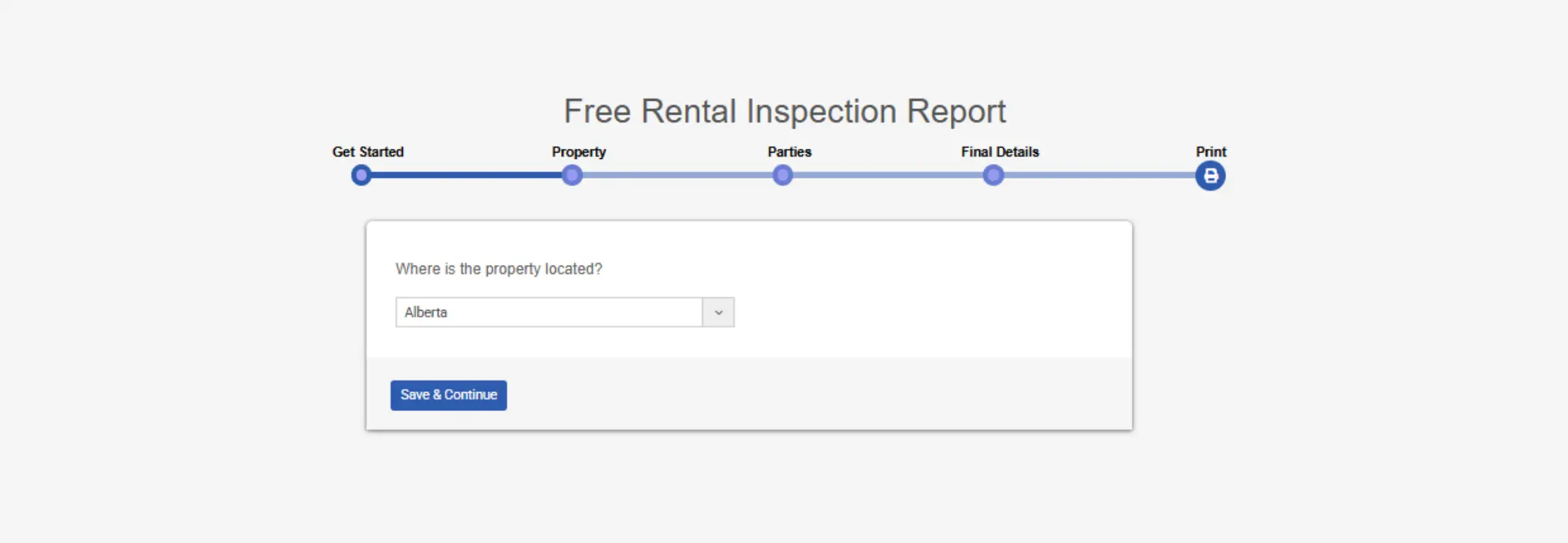
1. Select Your Template
2. Add Property Details
Input the specific street address, unit number, and the scheduled date of the walkthrough to establish a precise timeline and location for the record.
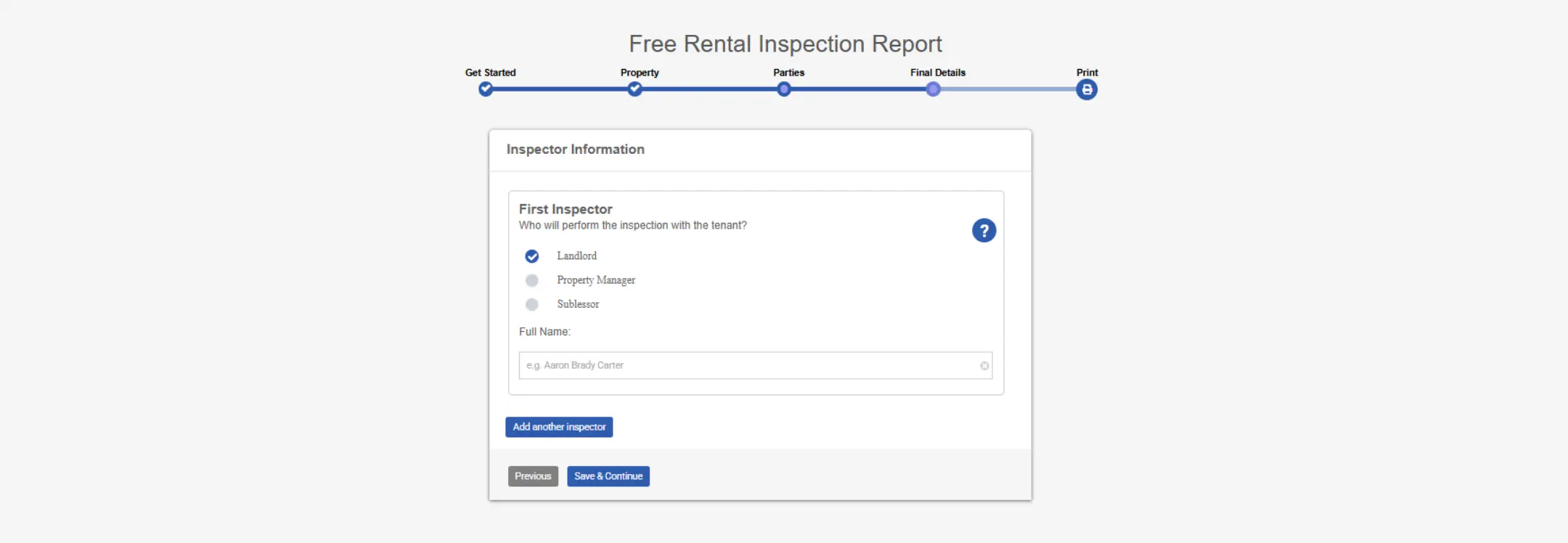
3. Add Party Details
Register the full names and contact data for the landlord, the tenant, and any designated representatives attending the inspection to ensure all stakeholders are legally recognized.
4.
Add final details
Record the state of each area, noting any maintenance requirements or specific observations. Be sure to attach high-resolution images to provide a clear visual history of the property.
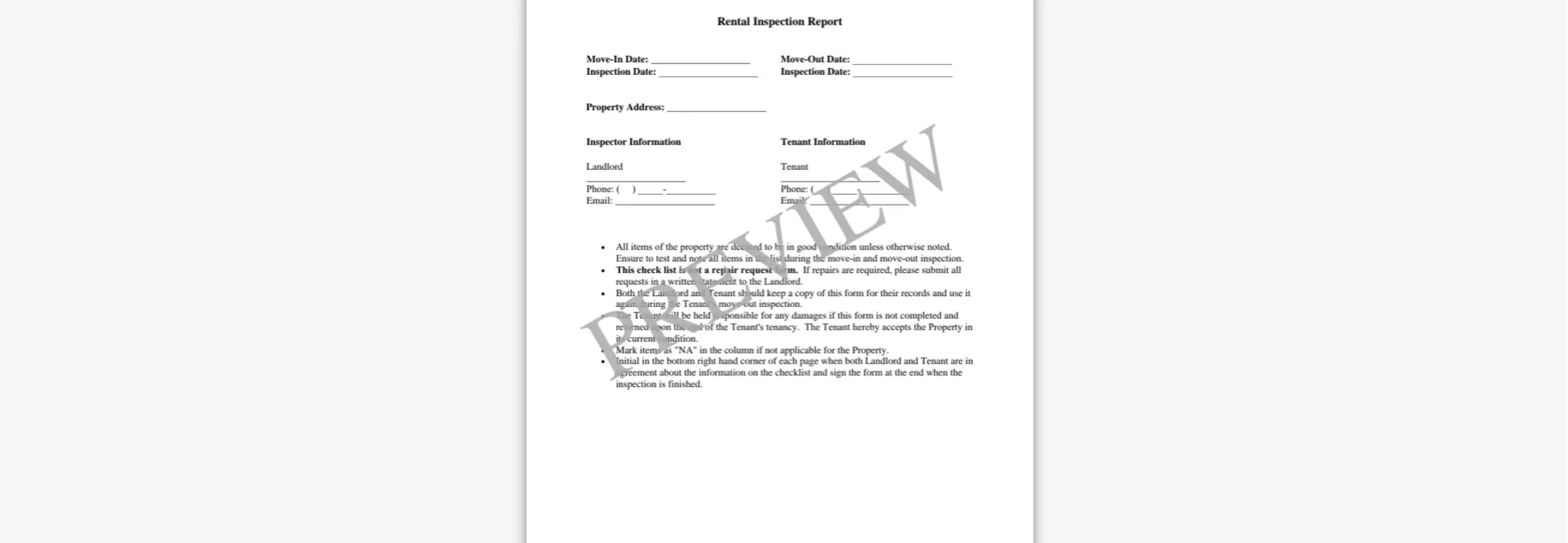
5. Preview and Print
Perform a comprehensive review of the data for accuracy. Once verified, download the document for your digital archives or print a hard copy for manual signatures.
The Legal Importance of Complete Documentation
In Canada, the burden of proof in a residential tenancy dispute almost always rests with the person making the claim. If a landlord wants to keep a security deposit to pay for a broken window, they must prove the window was intact when the tenant arrived. A complete and signed Rental Inspection Report Canada is the standard form of evidence used by provincial arbitrators. Without it, claims for damages are frequently dismissed, leaving the landlord to pay for repairs out of pocket.
Moving Toward Digital Inspection Reports
The shift toward the Online Rental Inspection Report is driven by a need for efficiency and security. Digital reports are far superior to paper ones because they are easily searchable and cannot be physically lost or destroyed. They also ensure compliance with privacy laws like the Personal Information Protection and Electronic Documents Act. Storing reports in the cloud allows both parties to access the document at any time, which promotes transparency and reduces the chance of lost communication.
Best Practices for Efficient Inspections
To get the most value out of your inspections, you should adopt a professional and systematic approach. These best practices will save you time and help maintain a positive relationship with your tenants.Schedule Inspections in AdvanceSurprising a tenant with an inspection is a quick way to create tension. Always provide the legally required notice in writing well in advance. This gives the tenant time to tidy the unit and prepare any questions they may have for you. A scheduled visit is much more productive and professional than a hurried or unannounced one.
Conduct Joint Walk-Throughs
Whenever possible, you should encourage the tenant to be present during the check. This is your chance to show them that you are a diligent and fair landlord. It also allows you to explain the difference between normal wear and tear and damage on the spot. A joint walkthrough builds trust and ensures that everyone is literally on the same page regarding the state of the home.
Keep Historical Records
Do not discard your old reports once a tenancy ends. Keeping a history of the property for several years is a smart business move. It allows you to track maintenance trends and see if certain building systems are failing prematurely. Historical records are also valuable if you ever decide to sell the property, as they provide proof to potential buyers that the asset has been professionally maintained.
Use Clear Condition Ratings
Consistency is key to an effective Rental Inspection Report template. You should use the same set of ratings for every unit you manage. This makes it easier to compare different properties and train staff to conduct inspections accurately. Clear ratings remove the subjectivity from the process and make your reports more reliable for insurance companies and legal boards.
Address Identified Issues Promptly
The goal of an inspection is not just to find problems but to fix them. If you identify a maintenance need, such as a leaky tap or a faulty smoke detector, you should schedule a repair immediately. Prompt action shows the tenant that you value their safety and comfort. It also prevents small, cheap fixes from turning into expensive, structural disasters.
The Financial Impact of Proper Inspections
Professional property management is a game of risk mitigation. The financial impact of regular inspections is seen in the long term return on investment. By identifying minor leaks and electrical faults early, you avoid major capital expenditures. Furthermore, a well documented property is less likely to face legal fines or prolonged vacancy. Units that are kept in excellent condition and professionally managed will always attract higher quality tenants and command higher market rents.
Why Choose Ziji Legal Forms for Rental Inspection Reports
Ziji Legal Forms provides a streamlined and compliant way to handle your property documentation needs. Our templates are designed specifically for the Canadian market, ensuring that you meet all provincial requirements for entry and reporting. By using our digital platform, you gain access to secure cloud storage and easy to use checklists that ensure no detail is missed. This professional approach saves you time and provides the high level of legal protection that every property owner and tenant deserves.
Conclusion: Maintain Fairness and Peace of Mind
A Rental Inspection Report Canada is a fundamental tool for creating a fair and transparent rental experience. By documenting every detail and addressing maintenance needs proactively, you protect both your investment and your rights. Professionalism in property management starts with good documentation, ensuring a successful tenancy for everyone involved.
Rental Inspection Report FAQs
What is a Rental Inspection Report or Checklist?
A Rental Inspection Report is used by Canadian landlords or property managers to evaluate and document the condition of the rental property before a tenant moves in and after they vacate. This document is essential to ensure both parties agree on the state of the property, helping to avoid conflicts over security deposits and damage claims when the lease ends. It records the condition of key elements, including fixtures and appliances, providing transparency and accountability during the rental process.
Why should I use a Rental Inspection Checklist in Canada?
Using a Rental Inspection Checklist is crucial for Canadian landlords and tenants to protect their rights. This checklist creates a detailed record of the property's condition, reducing the chances of disputes over damages, repairs, or security deposit refunds. Landlords can track the property’s state, while tenants have proof of any pre-existing damage, ensuring fair treatment during the move-out process.
How do I complete a Rental Inspection Report?
To complete a Rental Inspection Report in Canada, conduct a thorough walkthrough with the tenant before they move in, documenting the condition of each area, including appliances, floors, walls, windows, and fixtures. After the tenant moves out, repeat the inspection and compare both reports to identify any damage beyond normal wear and tear. This process ensures clarity for both parties regarding any deductions from the security deposit.
What items should be included in a Canadian Rental Property Inspection Checklist?
A Canadian Rental Property Inspection Checklist should cover every key element of the property, including kitchen appliances, light fixtures, plumbing systems, and heating/cooling systems. Outdoor features like balconies and yards should also be assessed. Conducting inspections before the tenant moves in and after they leave helps ensure all necessary areas are documented for fair evaluation.
Can I use the same Rental Inspection Checklist for move-in and move-out inspections?
Yes, you can use the same Rental Inspection Checklist for both move-in and move-out inspections. Conducting both inspections allows you to monitor changes in the property’s condition during the tenancy. This process helps both landlords and tenants by providing a clear record of any damages or repairs that may be required, ensuring security deposit deductions are only for necessary repairs.
Is a Rental Inspection Report required by law in Canada?
While a Rental Inspection Report may not be legally mandatory across all Canadian provinces, it is highly recommended for both landlords and tenants. A properly completed checklist provides essential documentation in case of disputes over property damage or repairs, particularly in relation to security deposits. By having a record, landlords and tenants can protect their interests and avoid misunderstandings.
How frequently should a rental property be inspected?
In addition to conducting inspections at move-in and move-out, Canadian landlords may want to schedule periodic property inspections during the lease term, either quarterly or annually. These routine inspections help ensure that the property is being well-maintained and allows early identification of any issues that may require attention before they escalate into larger problems.
Can I customize the Rental Inspection Checklist for Canadian properties?
Yes, our DIY Rental Inspection Checklist can be customized to fit your specific needs as a Canadian landlord or tenant. You can adjust the checklist to suit the type of property, whether it’s a condo, townhouse, apartment, or single-family home. By customizing the checklist, you can focus on the most relevant aspects of your rental property, ensuring nothing is overlooked.
Who should use a Rental Inspection Checklist?
Both landlords and tenants in Canada can benefit from using a rental inspection checklist. Landlords can document the property's condition to protect themselves from false damage claims, while tenants can ensure they aren’t held responsible for pre-existing damages. This tool provides transparency and helps maintain a fair relationship between both parties.
How can a Rental Inspection Checklist help with security deposits in Canada?
A Rental Inspection Checklist in Canada helps protect the security deposit by clearly documenting the property's condition at both move-in and move-out. If there is any damage beyond normal wear and tear, it ensures that only the necessary repair costs are deducted. Tenants benefit by having proof of the condition at the start of their lease, ensuring they aren’t charged for damages they didn’t cause.
What jurisdictions can use our Rental Inspection Checklist?
You can use our template to create a legal and valid Rental Inspection Checklist for the following jurisdictions:
|
Alberta
British Columbia
Manitoba
New Brunswick
Newfoundland and Labrador
Northwest Territories
Nova Scotia
Nunavat
Ontario
Prince Edward Island
Saskatchewan
Yukon |
AB
BC
MB
NB
NL
NT
NS
NU
ON
PE
SK
YT |


 Canada
 United States