TL;DR- A Canadian Bill of Sale is a vital document that provides proof of ownership transfer for personal property such as motor vehicles and equipment.
- Including precise details like the seventeen digit Vehicle Identification Number and full legal addresses is necessary to prevent provincial registration issues.
- Sellers should always use an As-Is clause to waive implied warranties and protect themselves from being held responsible for future repairs.
- It is critical for buyers to search the Personal Property Security Registry for active liens to ensure the item is not subject to repossession.
- Providing signed copies to both parties and involving a witness or notary public increases the legal credibility of the transaction.
- You can generate a legally compliant bill of sale by using Ziji Legal Forms to guide you through the specific requirements of your province.
Introduction
The legal landscape of personal property transfer in Canada is governed by a combination of provincial statutes and common law principles. At the heart of most private transactions lies the Bill of Sale, a document that serves as the primary evidence of an ownership change between a seller and a buyer. While many individuals view this as a simple receipt, its role is far more significant in the eyes of Canadian law. It functions as a formal record that finalizes a transaction and provides the necessary proof for registering assets such as motor vehicles, trailers, and heavy equipment with provincial authorities.
Navigating the complexities of Canadian property law requires a nuanced understanding of the Sale of Goods Acts and the various Personal Property Security Acts that exist across the provinces. These laws are designed to provide a framework for fair trade, ensuring that both parties have a clear understanding of their rights and obligations during the transfer of tangible goods. A properly executed Bill of Sale acts as a shield against potential disputes, clarifying the condition of the item at the exact moment of sale and establishing a clear timeline for the transfer of liability from one party to the other.
Despite its importance, the process of creating a Bill of Sale is frequently marred by errors that can lead to severe legal and financial consequences. From omitting essential identification details to failing to check for existing liens, these mistakes can invalidate the transfer or leave the buyer responsible for the seller's unpaid debts. In the Canadian context, where provincial registries maintain strict standards for documentation, even a minor clerical error can stall the registration of a vehicle or the processing of an insurance claim. This report explores the most common pitfalls and provides expert guidance on how to craft a legally sound document that stands up to scrutiny in any Canadian jurisdiction.
The shift toward digital transactions has introduced both convenience and new challenges to the creation of legal forms in Canada. While online platforms offer accessible templates, the burden of ensuring accuracy remains with the parties involved in the sale. Understanding the specific terminology and statutory requirements of the local jurisdiction is essential for anyone looking to complete a secure transaction. By adhering to best practices and avoiding common oversights, Canadians can facilitate smooth property transfers that protect their interests and comply with the rigorous standards of modern commercial law.
Definitions of Key Terms
Bill of Sale
A Bill of Sale is a written legal instrument used in Canada to document the transfer of title for moveable and tangible personal property from a transferor to a transferee. It is frequently referred to as a sales receipt or proof of purchase, and it serves as the definitive evidence that a transaction has occurred and that ownership has officially changed hands. Unlike a purchase agreement, which might outline various conditions and future obligations, a Bill of Sale is typically used to finalize the deal at the moment the property is delivered and the payment is made.
In most Canadian provinces, the provision of a Bill of Sale is mandated by legislation for the registration of used motor vehicles and other high-value assets. This document captures the essential details of the transaction, including the identities of the parties, the description of the property, and the agreed-upon price. It is a legally binding record that protects both the buyer and the seller by establishing a clear point of transfer for the rights and responsibilities associated with the property in question.
Buyer and Seller
In the context of a Canadian Bill of Sale, the seller is the individual or corporate entity that holds the legal title to the property and intends to transfer it to another party. The seller must have the legal right to sell the item, meaning they must be the actual owner or an authorized representative. If the seller does not have clear title, the transaction may be void, and the buyer could face the loss of the property without a simple means of recovering their funds.
The buyer is the party that acquires the property in exchange for value, which is usually a monetary payment. In Canadian law, the buyer is responsible for performing due diligence to ensure that the seller is the legitimate owner and that the property is free of undisclosed defects or liens. Once the Bill of Sale is signed and delivered, the buyer assumes all risks and liabilities associated with the property, making the accuracy of the document critical for their long-term protection.
Consideration
Consideration is a fundamental element of any contract in Canada, referring to the value or benefit that is exchanged between the parties to make the agreement legally enforceable. In a typical sale, the consideration is the purchase price paid by the buyer in exchange for the title to the goods provided by the seller. Canadian courts generally do not concern themselves with the adequacy of the consideration, meaning the price does not need to reflect the fair market value of the item to be valid.
The principle of mutual consideration ensures that both parties are providing something of value, which distinguishes a binding contract from a simple gift. If the Bill of Sale fails to mention the consideration, or if the consideration is never actually provided, the contract may be considered a bare promise and could be challenged in a court of law.
As-Is Sale
An As-Is sale is a transaction where the buyer acknowledges and accepts the property in its current state, including all visible and hidden defects. Legally, this means the buyer is waiving any claims against the seller for the condition, quality, or usefulness of the item once the sale is finalized. In Canada, this clause is a staple of private transactions for used goods, shifting the burden of inspection and repair entirely onto the buyer.
However, the inclusion of an As-Is clause does not grant the seller immunity from claims of fraud or intentional misrepresentation. If a seller knowingly hides a dangerous defect or provides false information about the mechanical state of a vehicle, the buyer may still have legal remedies under provincial consumer protection acts. The clause is generally interpreted as a waiver of implied warranties of merchantability and fitness for a particular purpose, but it cannot override the seller's duty to be truthful about material facts.
Odometer Disclosure
Odometer disclosure is the formal process of documenting the exact distance a vehicle has traveled as indicated by its dashboard reading at the time of sale. This is a critical component of a vehicle Bill of Sale in Canada because it helps determine the fair market value and the expected remaining life of the engine and other components. Accurate disclosure is required by law in many provinces, and tampering with an odometer or failing to provide a truthful reading is a serious offense that can lead to criminal charges or civil lawsuits.
When a vehicle is sold, the seller must state whether the odometer reading reflects the actual distance driven to the best of their knowledge. If the odometer has been replaced, has rolled over its maximum limit, or is currently broken, these facts must be disclosed in writing within the Bill of Sale. Failure to provide an accurate reading can result in the buyer having an immediate right to cancel the contract and seek damages for any resulting financial losses.
Notarization
Notarization is the process of having a document authenticated by a Notary Public, who confirms the identity of the signers and witnesses the execution of the instrument. While not all private sales in Canada require a notarized Bill of Sale, many people choose this option for high-value items to provide an extra layer of legal security. A notary seal on a document serves as a globally recognized mark of authenticity, making it particularly useful for transactions involving parties in different provinces or countries.
In Ontario and Alberta, Notaries Public have broader powers than Commissioners for Oaths, including the ability to certify true copies of original documents. Every lawyer and paralegal in Ontario is also a commissioner for taking affidavits, and they can often assist with the swearing of declarations required for specific vehicle transfers. Using an authorized official ensures that the Bill of Sale was signed voluntarily and that the parties involved are indeed who they claim to be, reducing the risk of identity fraud.
Personal Property
Personal property refers to all tangible and moveable assets that are not permanently attached to land or buildings. This category is broad and includes everything from consumer goods like electronics and furniture to industrial equipment, motor vehicles, and watercraft. In the legal context of a Bill of Sale, personal property is distinguished from real property by its ability to be physically moved and transferred without the need for complex land title registration systems.
The management of personal property in Canada is heavily influenced by the Personal Property Security Act, which governs how security interests and liens are registered against these items. This legislation ensures that creditors can protect their financial interests when an item is used as collateral for a loan. For a Bill of Sale to be effective, it must accurately describe the personal property so that any potential buyer or creditor can identify it and search the relevant registries for outstanding debts.
Now that we are aware of the key terms in a bill of sale, let us move to the common mistakes people make when creating them.
Mistake 1: Leaving Out Essential Information
Mistake
One of the most frequent errors encountered in Canadian property transactions is the omission of basic yet essential details that define the parties and the deal. This mistake often involves failing to record the full legal names of the buyer and seller or neglecting to include their current residential addresses. Some individuals also forget to state the exact date the transaction took place or the specific location where the keys and title were handed over. Another common omission is the failure to include contact information such as phone numbers or email addresses, which are necessary for any future correspondence.
Why it's a problem
Leaving out essential information creates a legal vacuum that can make the Bill of Sale difficult to enforce if a dispute arises. Provincial registries like ServiceOntario or Alberta's registry agents require these details to process ownership transfers and to calculate the appropriate amount of retail sales tax. If the names on the Bill of Sale do not match the identification of the parties, the registry may reject the application, leaving the vehicle in the seller's name. This situation can lead to the seller being held liable for parking tickets or even accidents that occur after the property has been sold.
How to avoid it
To avoid this pitfall, parties should use a comprehensive checklist to ensure that every necessary field is completed before the document is signed. It is essential to verify the full legal names of both the buyer and the seller against their government-issued identification to ensure total accuracy. The Bill of Sale should clearly state the final purchase price and the method of payment, as this provides a clear paper trail for the financial transaction. Taking the time to double-check that both parties' physical addresses are current and accurate will facilitate a much smoother registration process with the provincial motor vehicle branch.
Mistake 2: Providing a Vague or Inaccurate Item Description
Mistake
A vague or inaccurate description of the item being sold is a common error that can undermine the validity of a Canadian Bill of Sale. This mistake often involves using general terms like "used car" or "heavy equipment" without providing the specific identifiers that distinguish the asset from others. Sellers may also misrecord the model year, the color, or the specific trim level of a vehicle, or they might omit the critical seventeen-digit Vehicle Identification Number. Inaccurate odometer readings at the time of sale also fall into this category, leading to confusion about the true condition of the asset.
Why it's a problem
An imprecise description makes it nearly impossible for provincial authorities to link the Bill of Sale to the correct record in their registration database. The VIN is the unique identifier for a vehicle, and any error in this code will cause the registry to reject the transfer of ownership. Furthermore, a vague description can be used by a dishonest party to claim that a different item was intended for the sale, leading to prolonged legal battles. For the buyer, an inaccurate description might hide the fact that the vehicle was previously a salvage or rebuilt unit, which significantly affects its market value and insurance eligibility.
How to avoid it
The most effective way to avoid this mistake is to physically verify every identifying mark on the item and compare it directly to the existing registration documents. When selling a vehicle, the VIN should be copied directly from the dashboard or the door jamb to ensure it is recorded without error. For other types of personal property, such as tools or electronics, the manufacturer's serial number and model number must be included in the description. Providing a list of included accessories and a brief summary of the item's current condition will also help prevent future misunderstandings about what exactly was being sold.
Mistake 3: Forgetting to Include Warranty Disclaimers or “As-Is” Terms
Mistake
Many private sellers in Canada forget that unless specifically disclaimed, certain warranties may be implied by the Sale of Goods Act in their province. The mistake of omitting an "As-Is" clause or a clear warranty disclaimer can leave the seller exposed to liability for the mechanical or structural failures of the item after the sale is complete. Some sellers assume that because the item is used, the buyer automatically understands that there is no guarantee, but this assumption is not a strong legal defense. Failing to put these terms in writing means the seller is essentially relying on the buyer's goodwill if a problem occurs.
Why it's a problem
Without a clear disclaimer, a buyer might argue in court that the seller provided a verbal warranty regarding the item's fitness for use or its recent repair history. Canadian courts may look at any advertisements or statements made during negotiations to determine if an implied promise of quality existed. This can result in the seller being forced to pay for expensive repairs or even being ordered to take the item back and provide a full refund. For the buyer, the absence of an "As-Is" clause might lead to a false sense of security, which is quickly shattered when they realize they have no legal recourse for a major defect.
How to avoid it
Sellers should always include a prominent "As-Is" clause in the Bill of Sale that states the buyer accepts the item in its current condition with all known and unknown faults. This statement should explicitly disclaim all expressed or implied warranties and clarify that the seller is not responsible for any future repairs. It is also helpful to include a sentence stating that the buyer has had the opportunity to inspect the item or have it inspected by a qualified professional of their choice. By documenting this agreement in writing, both parties establish a clear boundary for liability that prevents most post-sale disputes regarding the condition of the goods.
Mistake 4: Using a Bad Template or Not Customizing the Form
Mistake
A significant number of Canadians make the mistake of using a generic Bill of Sale template that was originally designed for the United States legal market. These forms often contain terminology that is irrelevant in Canada, such as references to state-specific smog tests or American tax codes. Furthermore, many individuals fail to customize their templates to reflect the unique aspects of their specific transaction, such as complex payment terms or the inclusion of a trade-in. Relying on a one-size-fits-all form often results in missing the specific statutory requirements of the local province.
Why it's a problem
Using an inappropriate template can render the Bill of Sale legally questionable or even completely invalid in the eyes of provincial registries. If a form uses American legal terms, a Canadian government official may reject it, causing significant delays in the registration of the property. Moreover, a generic template may not have space for the specific disclosures required under Canadian law, such as those related to the vehicle's provincial history or salvage status. This lack of specificity can leave holes in the legal protection of both parties, making it difficult to prove the exact terms of the agreement if they are ever challenged.
How to avoid it
To ensure the best results, parties should select a Bill of Sale template that is specifically designed for use in Canada and complies with the laws of their local province. Once a high-quality template is found, it must be thoroughly reviewed and customized to include all the relevant details of the deal. If the sale involves multiple buyers or sellers, the form should be adjusted to include signature lines for everyone involved. Using a reputable source like Ziji Legal Forms ensures that the document contains the correct Canadian legal language and follows the formatting standards expected by provincial authorities.
Mistake 5: Not Including All Necessary Signatures
Mistake
A surprisingly common error in Canadian private sales is failing to secure the signatures of all parties involved in the transaction. This often occurs when only the seller signs the document, or when one of several co-owners of an asset is not present to execute the form. In the rush to complete a sale, parties may overlook the fact that a Bill of Sale is a mutual agreement that requires the consent of everyone with a legal interest in the property. Another part of this mistake is neglecting to date the signatures, which is essential for establishing when the transfer of ownership actually occurred.
Why it's a problem
Without the signatures of both the buyer and the seller, the Bill of Sale may not be considered a legally binding contract. A signature is the ultimate evidence that a person has read the document and agreed to its terms, including any "As-Is" clauses or price points. For vehicle transfers, provincial registries will almost certainly reject any application where the seller's signature does not match the names listed on the existing registration. If a co-owner does not sign, the buyer may find themselves in a legal dispute with someone who still claims a right to the property they just paid for.
How to avoid it
Before the transaction is considered finished, the parties must ensure that every person listed on the Bill of Sale has signed and dated the document in the appropriate sections. If the item is owned by a corporation, the person signing must have the legal authority to bind the company to the sale. It is best practice to have all parties sign the document at the same time and in each other's presence to ensure the authenticity of the signatures. Double-checking that all signatures are legible and accompanied by the printed name of the signer will prevent any future confusion about who actually participated in the deal.
Mistake 6: Skipping Witnesses or Notarization When Appropriate
Mistake
Many Canadians believe that involving a witness or a Notary Public is an unnecessary expense or a time-consuming formality that is not required for a private sale. While notarization is not mandatory for every Bill of Sale in Canada, skipping this step for high-value items is a mistake that reduces the security of the transaction. Parties often fail to realize that a neutral third-party witness can provide vital testimony if one side later claims that they were coerced into signing or that their signature was forged. This mistake is particularly common in online marketplace sales where the parties are eager to finish the transaction quickly.
Why it's a problem
In the event of a legal challenge, a Bill of Sale that has not been witnessed or notarized relies entirely on the credibility of the two parties involved. If the seller disappears or the buyer denies signing the document, it becomes very difficult for the remaining party to prove the validity of the sale. Furthermore, some specific transfers in Canada, such as gifting a vehicle to a family member to avoid retail sales tax, require a sworn statement before a commissioner of oaths or a notary. Without this official verification, the parties may be forced to pay taxes or fees that they were legally entitled to avoid.
How to avoid it
For any transaction involving a significant amount of money, it is highly recommended to have at least one independent witness sign the Bill of Sale. If the sale involves complex terms or parties located in different provinces, seeking the services of a Notary Public is a wise investment for long-term protection. Many provincial government offices and registry agents offer commissioning services for a small fee to help with the signing of affidavits and declarations. Taking this extra step ensures that the document carries a higher level of legal weight and is much less likely to be successfully challenged in court.
One caution
It is important to understand that in Canada, the role of a Notary Public is distinct from that of a Commissioner for Oaths. A commissioner is typically authorized only to administer oaths and declarations for documents that will be used within their specific province. A Notary Public has broader powers, including the authority to witness signatures for documents that will be used across Canada or internationally. If your Bill of Sale is for a transaction that crosses provincial borders, ensure that you use a Notary Public to avoid the risk of your document being rejected by the receiving authority.
Mistake 7: Omitting Statutory Disclosures (Odometer, etc.) for Certain Sales
Mistake
A common and serious error in Canadian vehicle sales is the omission of mandatory statutory disclosures regarding the history and condition of the car. Sellers often fail to disclose if a vehicle was previously used for emergency services, as a taxi, or as a daily rental unit. Another frequent oversight is failing to mention if the vehicle has been classified as salvage, rebuilt, or irreparable under provincial traffic safety laws. Even well-meaning sellers may forget to disclose that the vehicle was imported from another country or that its manufacturer's warranty has been cancelled.
Why it's a problem
Omitting mandatory disclosures can lead to the buyer having the legal right to cancel the sale and demand a full refund even months after the transaction is finished. Under Canadian consumer protection laws, failing to provide truthful information about a vehicle's previous use or damage history can be considered fraudulent misrepresentation. This can result in the seller being ordered to pay significant damages, including the costs of repairs and any legal fees incurred by the buyer. For the buyer, an undisclosed history of flooding or structural damage can mean owning a vehicle that is unsafe to drive and has very little resale value.
How to avoid it
To ensure full compliance, sellers should provide a written statement within the Bill of Sale that covers all material facts about the vehicle's history. In provinces like Ontario, providing the mandatory Used Vehicle Information Package is an essential step that fulfills many of these disclosure requirements. Buyers should also proactively ask for a vehicle history report from a reputable service to verify the information provided by the seller. Being completely transparent about any past accidents or major repairs protects the seller from future litigation and ensures that the buyer is making an informed decision about the purchase.
Mistake 8: Leaving Blanks or Making Errors on the Document
Mistake
In the excitement of finalizing a deal, many parties make the mistake of leaving blank spaces on the Bill of Sale or making sloppy clerical errors. This often includes failing to fill in the final purchase price or the date of the sale, with the intention of completing it later. Errors can also take the form of misspelling the names of the parties or transposing digits in the Vehicle Identification Number. Some individuals also make the error of using liquid paper or crossing out mistakes without initialing the changes, which can lead to questions about the document's authenticity.
Why it's a problem
A Bill of Sale with blanks is a major security risk because it can be altered by a dishonest party after the signatures have been obtained. For example, a buyer might lower the purchase price on the form to pay less sales tax, which could result in the seller being audited or the buyer being fined for tax evasion. Errors in the identification details will cause the document to be rejected by provincial registries, forcing the parties to meet again to sign a new form. Furthermore, uninitialized changes on a legal document can be seen as evidence of tampering, making it difficult to use the form as proof in a court case.
How to avoid it
The best way to avoid this mistake is to review the Bill of Sale slowly and carefully before anyone signs it. Ensure that every field is filled in completely, and if a section is not applicable to your sale, write "N/A" or draw a line through it to prevent future alterations. If a mistake is made while filling out the form, it is always better to start over with a fresh document rather than trying to fix it with corrections. If you must make a small correction, both the buyer and the seller should initial directly next to the change to show that they both acknowledged and agreed to it.
Mistake 9: Not Stating Ownership and Liens Status Clearly
Mistake
Many Canadians incorrectly assume that if they are buying a used item from a private seller, the item must be free of any outstanding debt. The mistake of not clearly stating the ownership and lien status in the Bill of Sale can have devastating financial consequences for the buyer. Sellers often fail to provide a written guarantee that they are the sole owner of the property and that no other party has a security interest in it. Relying on verbal assurances that a vehicle is "paid off" is a common error that bypasses the formal legal protections intended by the Personal Property Security Act.
Why it's a problem
In Canada, a lien follows the property, not the person who took out the loan. This means that if you purchase a vehicle with an active lien, the bank or finance company still has the legal right to repossess it if the previous owner stops making their payments. A buyer could lose their entire investment if the seller has used the property as collateral for a debt that remains unpaid at the time of the transfer. Without a clear statement in the Bill of Sale that the item is free of liens, the buyer may have a much harder time proving that the seller committed fraud if a repossession occurs.
How to avoid it
The Bill of Sale should always include a clause where the seller warrants that they have clear title to the property and that it is free of all liens and encumbrances. Before the sale is finalized, the buyer must perform an independent search of the Personal Property Security Registry in their province using the item's VIN or serial number. If a lien is discovered, the buyer should ensure that it is discharged by the seller before the final payment is made. Providing a written record of the search results as an attachment to the Bill of Sale will give both parties additional peace of mind and clarify the financial state of the asset.
Mistake 10: Failing to Provide Copies to Both Parties
Mistake
After the signatures have been obtained and the property has changed hands, a frequent mistake is that only one of the parties keeps the signed Bill of Sale. Often, the buyer takes the original to the registry and the seller is left with no evidence of the transaction. In other cases, the seller might keep the document for their tax records, leaving the buyer without the proof they need to get insurance or register the title. This failure to maintain duplicate records is an oversight that happens when the parties are focused only on finishing the physical exchange as quickly as possible.
Why it's a problem
Both the buyer and the seller have a legal and administrative need for an original signed copy of the Bill of Sale. For the seller, the document is their only protection if the buyer is involved in an accident or receives traffic violations before the official title transfer is processed by the province. For the buyer, the Bill of Sale is the foundational document required for registration, insurance, and proving their ownership if the item is ever stolen or damaged. If a dispute arises about the terms of the sale, a party with no copy will be at a severe disadvantage in any legal proceedings.
How to avoid it
The simplest way to avoid this mistake is to print two copies of the Bill of Sale and have both parties sign each one so that everyone leaves with an original. If only one copy is available, the seller should take a clear digital photograph of the signed document or make a physical photocopy immediately. Using a digital signing platform can also solve this problem by automatically emailing a completed and signed copy to both parties as soon as the transaction is finished. Storing your copy in a secure location, such as a safe or a digital cloud storage account, ensures that you are always prepared if the validity of the sale is ever questioned.
Another tip
It is a very good idea to keep the Bill of Sale along with all other documentation related to the item, such as service records and the original advertisement for the sale. This collection of records provides a comprehensive history of the transaction and the condition of the property at the time of the transfer. If you ever decide to sell the item again in the future, having the original Bill of Sale can help you prove the chain of ownership and provide transparency to the next buyer. Maintaining these records is a sign of a responsible owner and can significantly increase the resale value of your personal property.
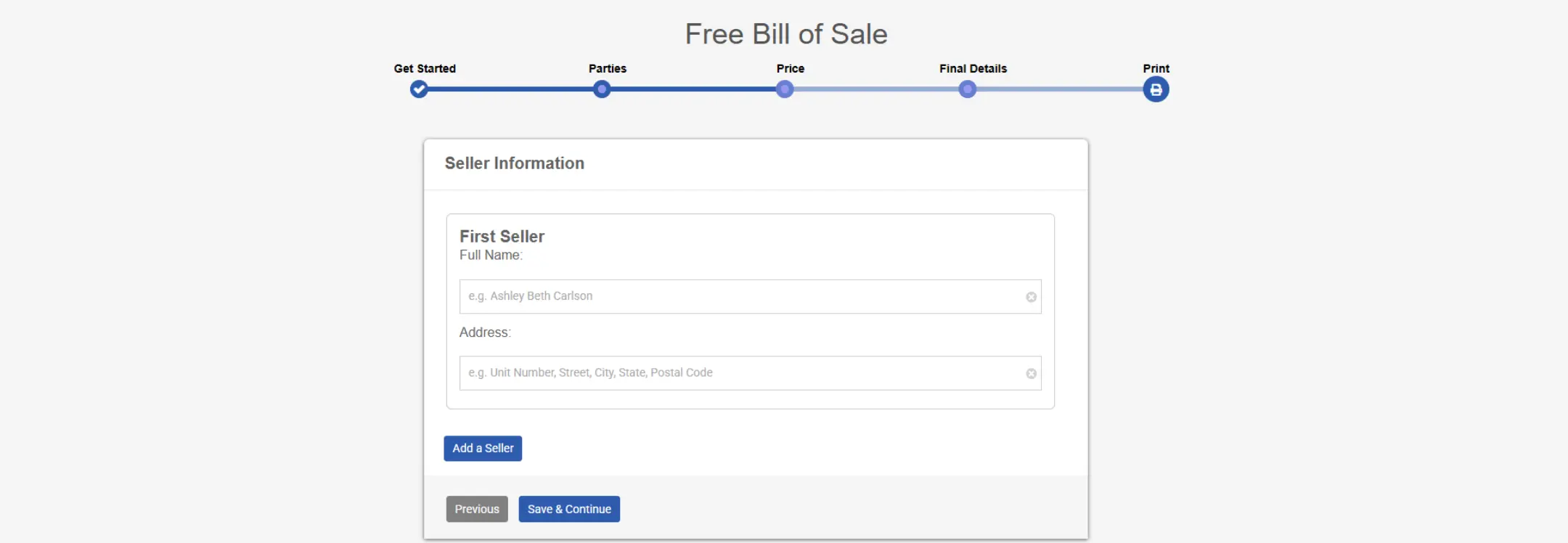
How to Create a Bill of Sale Using Ziji Legal Forms
1.Choose Template
2. Add Party Details
Input the full legal names and residential addresses for both the buyer and the seller to ensure the parties are clearly identified.
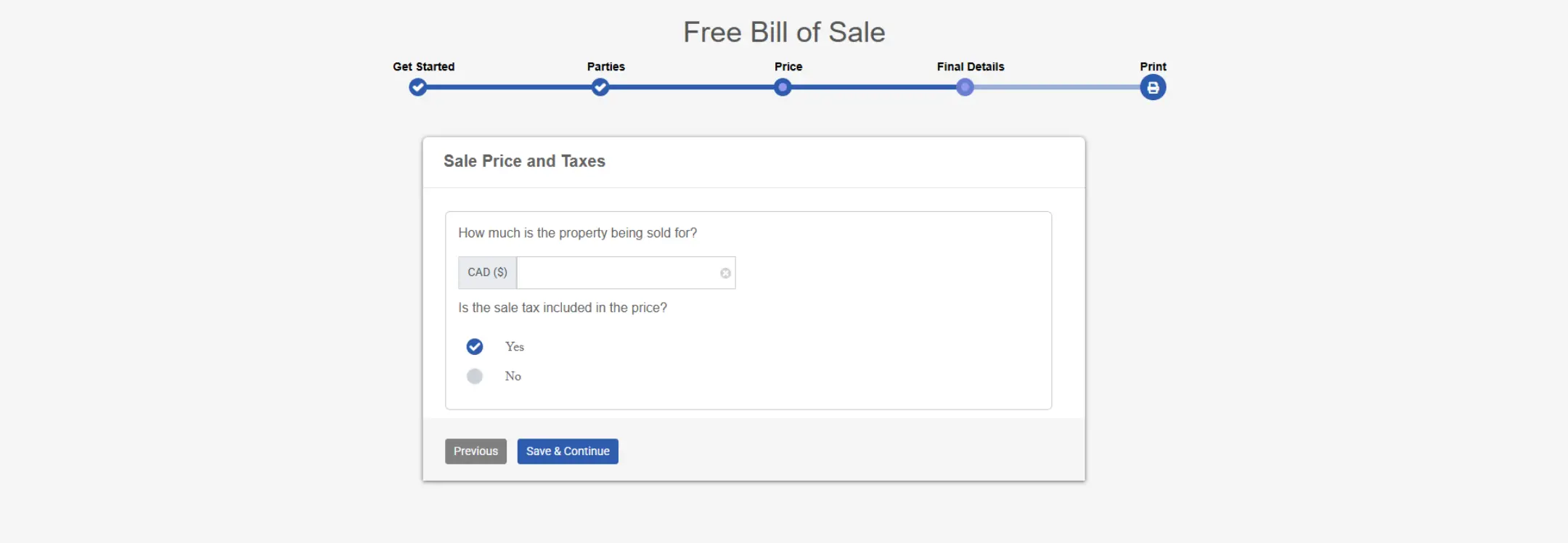
3. Add Pricing Details
Enter the final purchase price and the specific date of the sale along with any relevant payment terms or financing details.
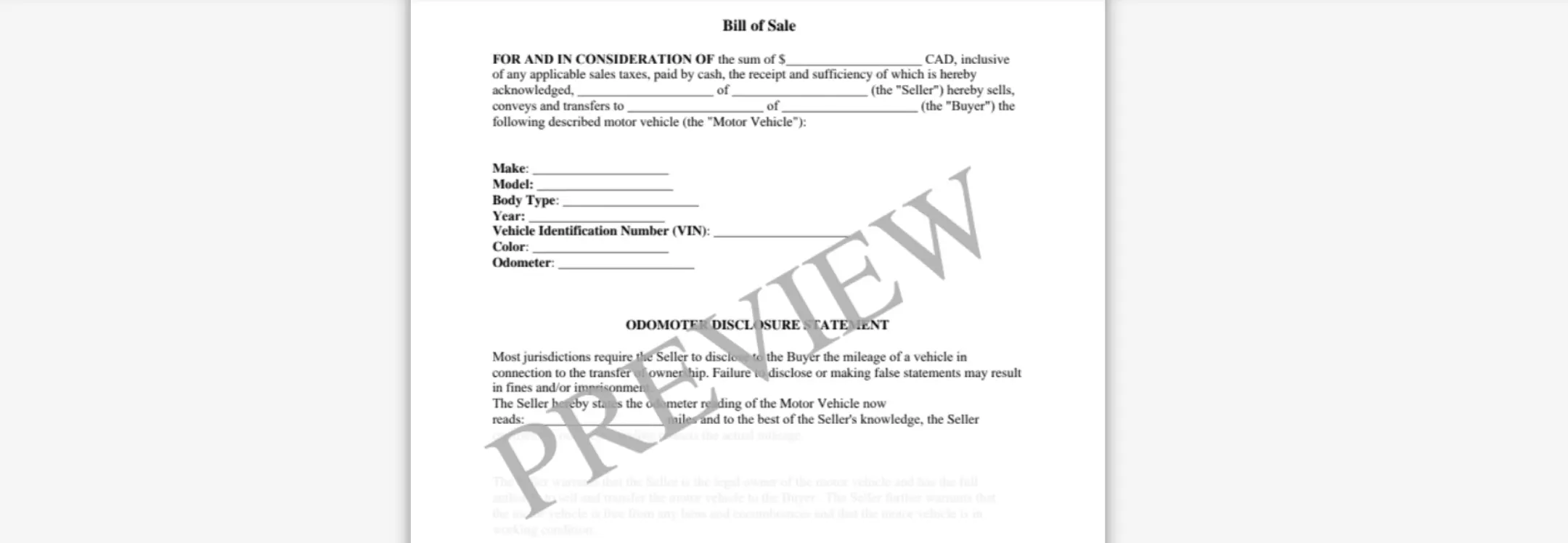
4. Add Final Details
Enter details such as the odometer reading for vehicles and any necessary As-Is clauses to protect the parties from liability.
5. Preview and Print
Preview your completed Bill of Sale for any errors before you print two original copies for the signatures of everyone involved.
Conclusion
Creating a legally sound Bill of Sale in Canada requires careful attention to the details of identification, description, and disclosure to ensure the protection of both parties. By avoiding these ten common mistakes, sellers can limit their future liability and buyers can secure a clear title to their new property. A well-executed document serves as the foundation for a smooth ownership transfer and remains a vital record for provincial registration and tax purposes. Utilizing a professional platform like Ziji Legal Forms ensures that your transaction is documented with precision and complies with the rigorous standards of Canadian commercial law
Bill of Sale FAQs
What else can a bill of sale be called?
A bill of sale can also be referred to as follows: sales receipt, or proof of purchase. It can also have a longer name that references the item being sold, for example: RV trailer bill of sale, or bill of sale for vehicle.
What’s a bill of sale?
A bill of sale is a document that details the sale and transfer of property from the seller to the buyer.
When can you use a bill of sale?
A bill of sale can be used for most private sale of physical goods. The most common situation where a bill of sale is used is for the sale of a used car. Note that the transfer of property cannot be done via a bill of sale.
Here is common list of goods that can be sold via our bill of sale:
- Vehicles such as sedans, pick up trucks and motorcycles
- Recreational vehicles such as RVs, trailers, dirt bikes, and snowmobiles
- Watercrafts such as canoes, motorboats, jet skis and sail boats
- Firearms such as pistols and hunting rifles
- Animals such as pet cats, dogs, fish and birds, and farm animals such as hogs, horses and cattle.
- Personal items such as clothing, jewellery and watches
- Electronics such as audio receivers, HD televisions, computers, laptops, tablets and cell phones
What does being sold “as is” mean on a bill of sale?
An item that is sold “as is” means there is no guarantee as to the condition of the item. The buyer will be accepting the item in its current condition with any flaws present and the seller will be not responsible for any defects or flaws in the item.
What should be included in a bill of sale?
The bill of sale needs to have the following three main topics covered:
- The buyers and sellers, list who the parties are and their respective addresses
- The property listed in detail. Describe the item that is being sold to ensure that it’s identifiable. You want to be very specific in the detail to ensure there’s no ambiguity. If you’re selling a car, list the year, make, model, vehicle type and the VIN number including the odometer reading of the car. If you’re selling electronics, list the model and serial number of the item.
- The price of the item. List the sale price for the item being sold and whether there are any taxes payable in the transaction. Also listing the forms of payment being used in the transaction
Who should sign a bill of sale?
It is good practice to get both the buyer and seller to sign the bill of sale especially for the sale of more expensive items like cars and boats. Having both signatures enhances the authenticity of the parties’ intention to transfer the ownership from the buyer to the seller in case there is future dispute.
Do I need to sign in front of a notary for the bill of sale?
Notarization is typically not required in most cases. However, it might be prudent to get the bill of sale notarized for more expensive goods such as cars and boats in case of future dispute. A notarized bill of sale solidifies the seller’s intention to transfer the goods to the buyer since the transaction was witnessed and recorded by the notary after having verified the identify of both parties.
Is a bill of sale applicable for both new and previously owned goods?
Absolutely. A bill of sale can be used to record the sale and ownership transfer for items whether they are brand new or used. It serves as official documentation of the transaction regardless of the condition.
What records should I retain after completing a bill of sale?
It’s important that both the buyer and seller keep a copy of the signed bill of sale. This documentation can be useful for tax filings, warranty claims, or settling any future disagreements about the sale.
How does a bill of sale differ from a simple receipt?
A bill of sale offers more detail than a typical receipt. Besides showing proof of payment, it confirms the transfer of ownership and outlines the terms of the sale, making it a stronger legal proof of the transaction.
Is it appropriate to use a bill of sale for online purchases?
Yes, a bill of sale can be very helpful for transactions conducted over the internet, especially for higher-value items. It provides both buyer and seller with a clear record of the sale and its conditions.
What if the buyer requests a warranty or assurance?
If any warranty or guarantee is provided, it should be clearly indicated in the bill of sale document. Otherwise, most private sales are considered “sold as is,” meaning the seller does not promise anything about the item’s condition or future reliability.
What jurisdictions can use our bill of sale?
You can use our template to create a legal and valid bill of sale for the following jurisdictions:
|
Alberta
British Columbia
Manitoba
New Brunswick
Newfoundland and Labrador
Northwest Territories
Nova Scotia
Nunavat
Prince Edward Island
Saskatchewan
Yukon |
AB
BC
MB
NB
NL
NT
NS
NU
PE
SK
YT |


 Canada
 United States