TL;DR- A consent letter is strongly recommended for any Canadian minor traveling without both parents or legal guardians.
- The age of majority in Canada is either eighteen or nineteen depending on the province of residence.
- Notarization is the gold standard for verifying the authenticity of signatures for international travel.
- Airlines like Air Canada and WestJet have mandatory unaccompanied minor programs for children aged eight to eleven.
- Separated or divorced parents must provide copies of custody orders alongside the consent letter.
- Provincial health insurance offers very limited coverage outside Canada, making private travel insurance essential.
- You can use Ziji Legal Forms' Child Travel Consent Form template to easily make a valid consent document.
What is a Child Travel Consent Form
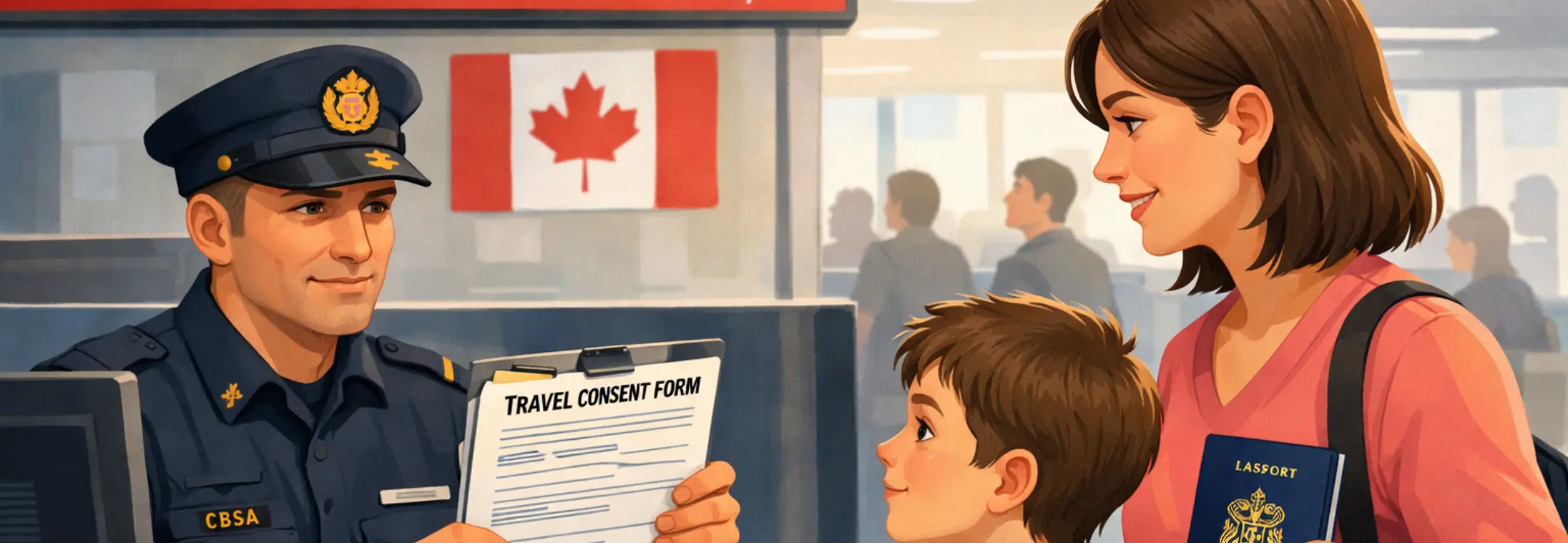
A Child Travel Consent Form is a written statement that confirms a minor has permission to travel abroad from any parent or person with decision-making responsibility who is not accompanying them. This document is an administrative tool used by border officials and transportation companies to verify that the travel is authorized by all legal guardians. While the form is not a strictly legal requirement under Canadian federal law, it is a recommended safeguard for children of any status in Canada.
The Scope of the Document
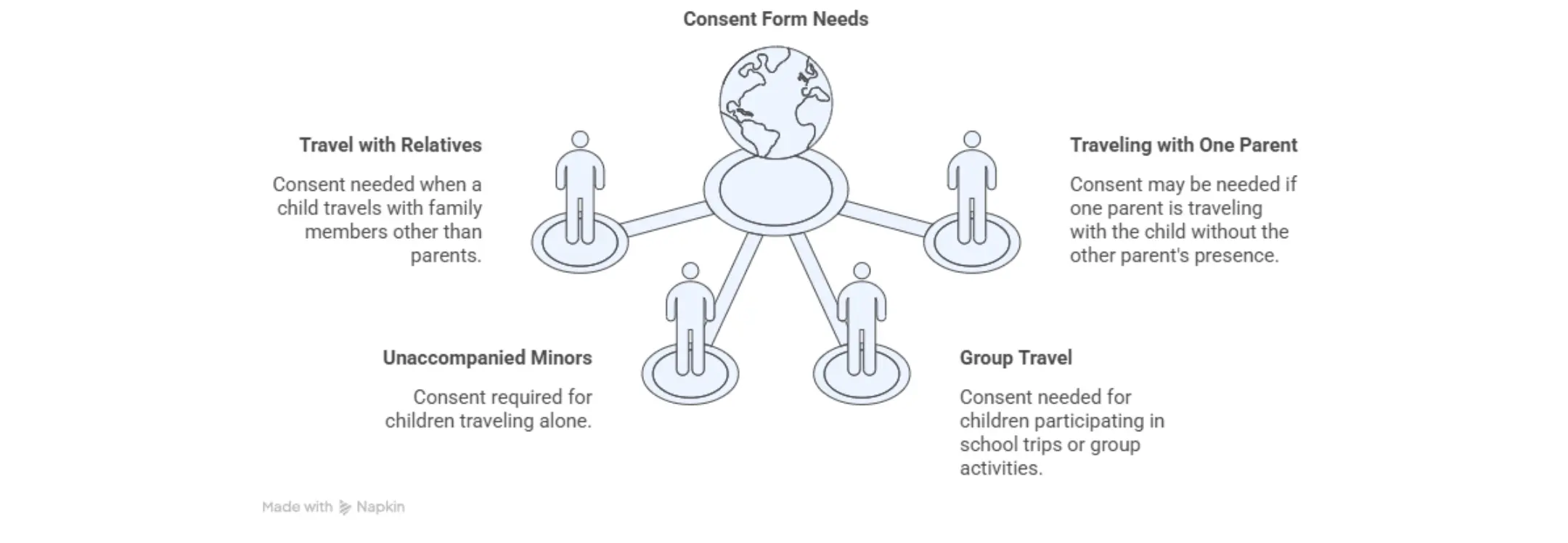
The document covers various travel scenarios such as a child traveling alone, with only one parent, with other relatives, or with an organized group like a school team. It demonstrates that the non-traveling guardian is aware of the trip, the destination, and the duration of the travel. Because immigration authorities are trained to look for potential cases of child abduction, this form acts as an immediate verification of parental intent.
Defining a Minor in Canada
The definition of a minor is a critical factor in determining the necessity of a consent letter. In Canada, an individual is considered a minor until they reach the age of majority, which is governed by provincial and territorial laws. For residents of British Columbia, New Brunswick, Newfoundland and Labrador, Nova Scotia, and the territories, the age of majority is nineteen. In all other provinces, including Ontario, Quebec, and Alberta, the age of majority is eighteen.
Legal and Practical Considerations
Although the Government of Canada recommends the letter for any child under nineteen, foreign authorities may have different thresholds. For example, some countries may classify anyone under twenty-one as a minor for entry and exit purposes. Consequently, the consent form remains a vital document for teenagers who might technically be adults in their home province but are viewed as minors by the destination country.
Why is it Important for International Travel
The primary driver behind the requirement for travel consent forms is the global effort to prevent international child abduction and human trafficking. Canada is a signatory to the 1980 Hague Convention on the Civil Aspects of International Child Abduction, which establishes protocols for the prompt return of children taken across borders without consent. A well-prepared consent letter serves as proactive evidence that the child is not being wrongfully removed from their home country.
Border Scrutiny and Security
Border services officers are perpetually on alert for missing or runaway children and will often check documents more closely for unaccompanied minors or those traveling with only one parent. If an officer is not convinced that a child has permission to travel, they have the authority to deny entry or exit. Carrying the consent form simplifies the process and provides the officer with the necessary contact information to verify the travel details with the parent at home.
Airline and Transportation Policies
Airlines and other transportation companies like trains or buses often have their own internal security policies regarding minors. An airline agent may refuse to issue a boarding pass if they suspect a custody dispute or if the documentation for a solo child traveler is incomplete. The consent form acts as a bridge between the parents and these private companies, ensuring that the company is not held liable for transporting a child without authorization.
Reducing Travel Delays
The practical benefit of the form is the reduction of stress and delay during travel. For land crossings into the United States, which occur frequently for day trips or vacations, a notarized consent letter is strongly advised to prevent being turned back at the port of entry. Even if an official does not ask for it on every occasion, having it ready avoids the risk of a detailed secondary inspection that could result in missing a flight or an event.
When Does a Child Need a Consent Form
The need for a Child Travel Consent Form Canada arises in any situation where the child is not accompanied by all individuals who possess legal decision-making responsibility. This includes simple vacations, school excursions, or even short visits to relatives across the border.
Traveling with One Parent
When a child travels with only one parent, the non-traveling parent should sign a consent letter regardless of whether they are married or in a common-law relationship. Border officials often check the child's birth certificate to see if both parents are listed and may ask for the second parent's signature if they are not present. This is a standard procedure to ensure that one parent is not taking the child abroad without the knowledge of the other.
Travel with Relatives or Friends
If a minor is traveling with grandparents, aunts, uncles, or family friends, a consent letter signed by both parents is essential. In these cases, the accompanying adult has no inherent legal right to make decisions for the child or to supervise them across borders. The consent form provides the relative or friend with the temporary authority needed to escort the minor through immigration and customs.
Unaccompanied Minors
Children traveling entirely alone, which often happens for visits to parents living in different cities or countries, must carry comprehensive documentation. This includes consent from all legal guardians and the contact details of the person who will be meeting them at the destination. Border officials scrutinize solo child travelers with the highest level of care to ensure they are not runaways and are traveling to a safe location.
Group Travel and School Trips
Organized trips with school groups, sports teams, or religious organizations require parental consent for every participant. While schools often provide their own internal forms, these may not meet the formal requirements of international border authorities. A notarized travel consent form is recommended for these trips, especially if the child will need emergency medical care while away from their parents.
Who Must Sign the Consent Form
The question of who must sign the consent form depends on the family's legal structure and any existing court orders or parenting agreements. Under Canadian law, any person or organization with decision-making responsibility for the child should provide their consent.
Married or Common-Law Parents
For parents who are together, the signature of the parent who is not traveling is the primary requirement. If neither parent is traveling, both should sign the form to confirm their joint approval of the trip. This is the most straightforward scenario, provided both parents are easily reachable and agree on the travel plans.
Separated or Divorced Parents
When parents are no longer together, the parent with parenting time or decision-making responsibility must sign the letter if they are not accompanying the child. If both parents share these responsibilities, it is best for both to sign the form to avoid any ambiguity at the border. Traveling with a copy of the separation agreement or a court order that outlines travel rights can also help clarify the situation for a border official.
Sole Custody and Guardianship
If one parent has sole decision-making responsibility, they may be the only signer required. However, even in sole custody situations, carrying a consent letter from the other parent is still recommended whenever it is safe to do so. If a parent has sole authority but the other parent is unreachable, they should travel with a copy of the custody decree that specifically grants them the right to take the child out of the country.
Deceased Parents
In the unfortunate event that one parent is deceased, the surviving parent should travel with a copy of the death certificate. If the child is traveling alone or with another person, the surviving parent should sign the consent form and attach the death certificate to it. This provides a clear explanation for why only one signature is present on the document and prevents unnecessary questioning by officials.
Legal Guardians and Tutors
If a child is in the care of a legal guardian, tutor, or a child welfare agency, the appropriate representative of that entity must sign the form. These signers must provide evidence of their authority to act on behalf of the child, such as guardianship papers or court orders. This is common for children in foster care or those traveling on exchange programs where a local organization holds temporary legal authority.
Key Information to Include in the Form
A well-drafted Child Travel Consent Form Canada must be precise and comprehensive to be effective. While there is no single official form, certain pieces of information are universally expected by border officials and transportation agents.
Information about the Child
The form must include the child's full legal name as it appears on their passport, as well as their date and place of birth. It is also helpful to include the child's passport number, date of issue, and the issuing country to provide a direct link between the consent letter and the child's travel document. If the child's surname differs from the parent's, a note about their birth certificate registration number can be included for further verification.
Details of the Accompanying Person
If the child is traveling with someone other than their parents, that person's full name, relationship to the child, and passport details should be provided. This allows the border official to verify the identity of the guardian at the port of entry. For unaccompanied minors, the form should instead list the contact details and full name of the adult who will be meeting the child at the destination airport or station.
Travel Itinerary and Destination
The document should specify the destination countries and the exact dates of the trip, including the date of departure and the date of return to Canada. It is also useful to list the addresses of where the child will be staying, whether it is a hotel or the home of a relative. Providing these details shows that the trip is well-planned and that the parents have a clear understanding of the child's location at all times.
Parent and Guardian Contact Information
The form must include the full legal names, home addresses, telephone numbers, and email addresses of the parents providing consent. This contact information is crucial because border officials may choose to call the parents to verify the letter's authenticity. Having direct and accessible contact details can prevent a minor delay from turning into a situation where the child is denied entry.
Notarization Requirements in Canada
Notarization is the process of having a notary public or lawyer witness the signatures on the consent form and verify the identities of the signers. While Canadian laws do not strictly require a travel consent letter to be notarized, the federal government and legal experts strongly advocate for it.
The Importance of a Notarized Signature
A notarized document carries an official seal that significantly reduces the likelihood of a border official questioning its authenticity. Because a handwritten note could theoretically be forged, an official verification by a licensed professional provides a much higher level of assurance to immigration authorities. This is especially true for international travel to countries with high security standards, such as the United States or the United Kingdom.
The Notarization Process
To get the form notarized, the parent or guardian giving consent must appear in person before the notary with valid government-issued photo identification. The notary will confirm the signer's identity, ensure they are signing the document voluntarily, and then apply their seal and signature. The traveling parent does not usually need to be present for the notarization of the other parent's signature, as the focus is solely on the person providing the permission.
Professional Verification Standards
Notaries and lawyers are trained to identify signs of coercion or fraud, making their involvement a powerful deterrent against child abduction. They will check that the names on the ID match the names on the consent form exactly and may keep a record of the transaction for future reference. Many families find that having the letter notarized once a year for recurring trips or for a specific complex journey provides peace of mind throughout the travel process.
Airline Policies for Minors Traveling Alone
Airlines have stringent policies for unaccompanied minors to ensure their safety and the airline's own legal compliance. These policies often include mandatory supervision for younger children and specific fees for the service.
Air Canada Unaccompanied Minor Service
Air Canada provides a mandatory service for children aged eight to eleven who are traveling without an adult. For teenagers aged twelve to seventeen, the service is optional but can be purchased if parents desire extra supervision for their child. The service is only available on non-stop flights and requires the parent to remain at the airport until the flight has successfully departed.
WestJet Unaccompanied Minor Policies
WestJet also requires an unaccompanied minor program for children between the ages of eight and eleven. WestJet only offers this service for domestic travel within Canada and does not permit unaccompanied minors on international flights to the United States or other global destinations. Parents must provide three physical copies of the required forms at the airport, and the person picking up the child must be over eighteen and present photo identification.
Comparison of Airline Fees and Rules
| Policy Deature |
Air Canada |
WestJet |
| Service Fee |
$100 to $118 CAD |
$100 to $118 CAD |
| Mandatory Ages |
8 to 11 inclusive |
8 to 11 inclusive |
| Optional Ages |
12 to 17 |
12 to 17 |
| Non-Stop Rule |
Mandatory |
Mandatory |
| International Travel |
Allowed on non-stop |
Domestic only |
The data in the table highlights that while the fees are similar, the geographic scope of the service varies significantly between carriers.
Medical Consent and Travel
When a child travels without their legal guardians, the ability to authorize medical treatment is a critical consideration. A Child Medical Consent form is a separate document that grants a temporary caregiver the authority to make healthcare decisions for the minor.
The Utility of Medical Authorization
A medical consent form is useful for school trips, vacations with relatives, or sports camps where parents are not present. It allows a teacher or grandparent to authorize emergency surgery, routine check-ups, or diagnostic tests if the parents cannot be reached immediately. This prevents delays in treatment that could be detrimental to the child's health, especially in foreign countries where medical staff may be hesitant to act without clear parental authorization.
The Mature Minor Doctrine
In many Canadian provinces, the legal age for medical consent is not the same as the age of majority. The mature minor doctrine allows children who demonstrate sufficient understanding of their treatment to provide their own consent. For example, in British Columbia, minors of any age may consent to their own healthcare if they understand the nature and consequences of the procedure and if it is in their best interest.
Provincial Differences in Medical Rights
Quebec has a specific statutory limit where children aged fourteen and older are generally presumed capable of consenting to their own elective medical care. In other provinces like Manitoba and Ontario, the threshold for presumed capacity is often sixteen, but physicians evaluate each case based on the child's development. Because these laws vary, carrying a parental medical consent form remains the safest way to ensure a minor receives care without legal roadblocks.
Provincial Health Insurance and Travel
A common misconception among Canadian parents is that provincial health insurance provides full coverage during travel outside the home province or the country. In reality, the coverage is often very limited, leaving families vulnerable to high medical bills.
Reciprocal Billing in Canada
Most provinces have a reciprocal billing agreement where they bill each other directly for physician and hospital services. However, Quebec is an exception and does not participate in this program for physician services, meaning travelers to Quebec may have to pay upfront for a doctor's visit and then seek reimbursement from their home province. Additionally, provincial plans rarely cover services like ambulances or air evacuation between provinces.
Out-of-Country Health Coverage Limits
The limits on provincial coverage are even more pronounced when traveling outside of Canada. Provincial plans typically only reimburse emergency medical costs at the same rate they would pay in Canada, which is often a small fraction of the actual cost in countries like the United States. For instance, a province might pay seventy-five or one hundred dollars per day for a hospital stay that actually costs thousands of dollars.
The Importance of Travel Insurance
Due to these significant gaps, parents should always purchase private travel insurance for their children. Private insurance can cover the difference between the provincial reimbursement and the actual bill, as well as providing for repatriation, prescription drugs, and other non-insured services. This is an essential financial safeguard for any trip, regardless of the child's age or health status.
How to Create a Child Travel Consent Form with Ziji Legal Forms
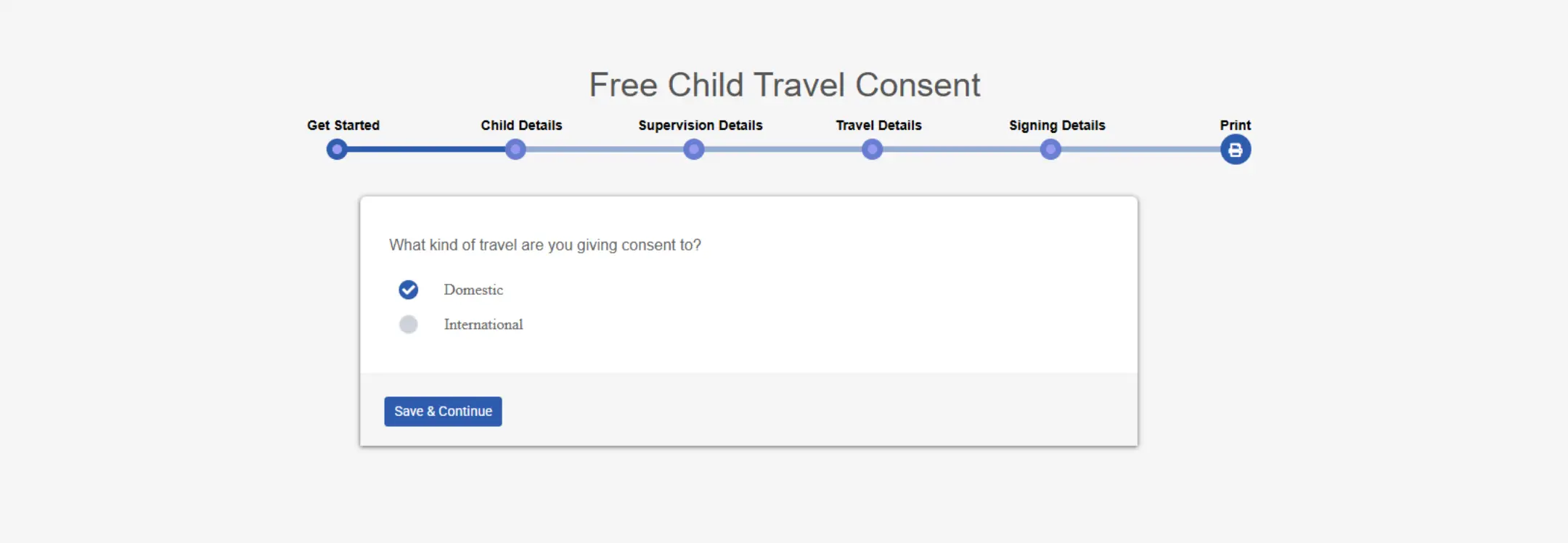
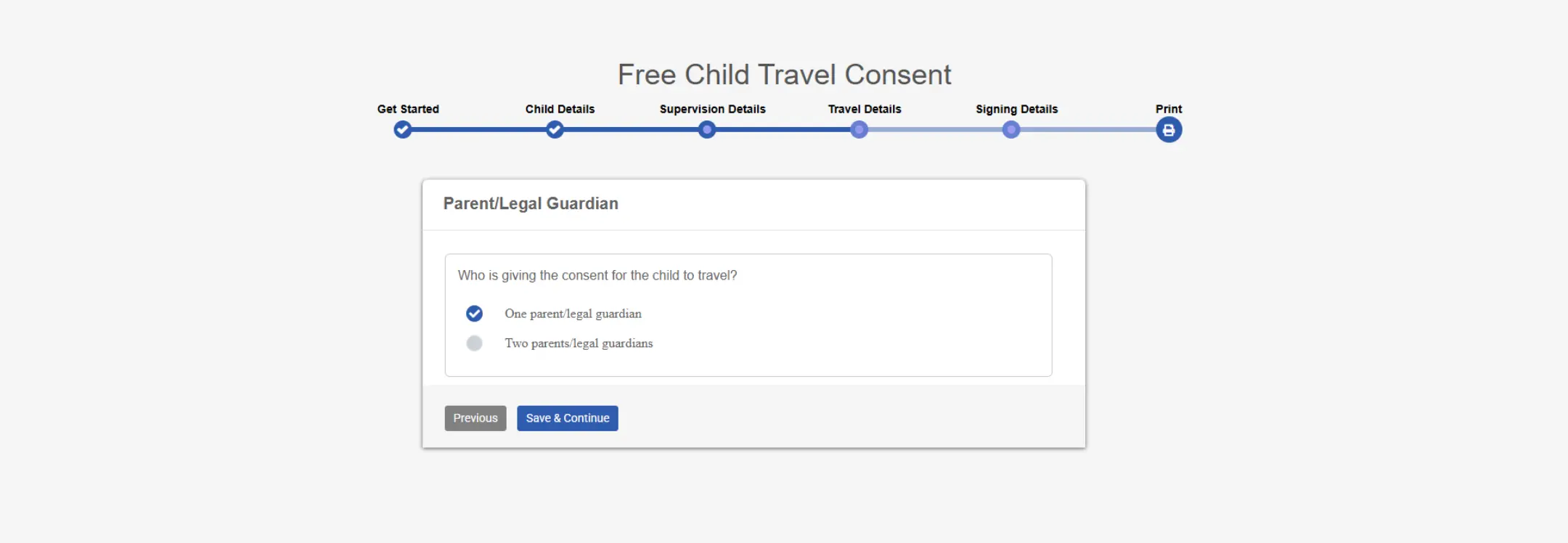
Crafting a professional Child Travel Consent Form template using Ziji Legal Forms ensures that all necessary Canadian legal requirements are addressed efficiently. The following steps guide parents through the process of generating a high-quality document for their next trip.
1. Select Template
Choose the right template by selecting the Canadian Child Travel Consent Form option from the family law section of the platform.
2. Add Child Details
Enter the child's full legal name, date of birth, and passport information exactly as they appear on their government ID.
3. Add Supervision Details
Provide the contact information and relationship of the accompanying adult or the person responsible at the destination.
4. Add Travel Information
Specify the destination countries, dates of travel, and the specific locations where the child will be staying.
5. Preview and Print
Review the completed form for any errors before printing the final version for signatures and notarization.
Accuracy and Verification Tips
Ensuring that every detail on the consent form is accurate is the best way to prevent issues at the border. Parents should double-check that the spelling of all names matches the child's passport and birth certificate exactly.
Managing Surnames and Identification
If a parent and child have different surnames, it is highly recommended to bring a copy of the child's birth certificate that lists the parent's name. Other documents like marriage certificates or name change papers can also explain the discrepancy to an immigration official. Providing these extra layers of verification shows the official that the parent has considered every detail and is not attempting to bypass security.
Timing of the Document
The consent form should be signed and notarized as close to the travel date as possible, typically within thirty days of departure. While some forms can be used for multiple trips if written broadly, many border officials prefer a new letter for every journey to ensure the consent is current. An old letter from a previous year may be rejected as it does not accurately reflect the current custody or living arrangements of the minor.
Bilingual and Translation Needs
Because Canada is a bilingual country, having the consent form in both English and French is useful for travel through Quebec or for international destinations that use French. For travel to non-English speaking countries, parents should check with the relevant embassy to see if a certified translation is required. Preparing for these language requirements in advance prevents the child from being stuck at a foreign border where the local officials cannot read the authorization.
Final Checklist for Minor Travel
Before heading to the airport or border crossing, parents should ensure they have a complete package of documents for their child.
| Document Type |
Requirement Level |
Purpose |
| Valid Passport |
Mandatory |
Identification and proof of citizenship |
| Consent Letter |
Strongy Recommended |
Proof of permission from non-travelling parents |
| Birth Certificate |
Recommended |
Verification of the relationship between child and parent |
| Custody Orders |
Mandatory (if applicable) |
Clatification of travel rights in divorce scenarios |
| Death Certificate |
Mandatory (if applicable) |
Explaining the absence of a second parent's signature |
| Medical Consent |
Recommended |
Authorization for healthcare decision in an emergency |
This list ensures that every potential question from an official can be answered with a physical document.
Conclusion
A Child Travel Consent Form Canada is a vital precaution that ensures minor children can travel safely and with full legal authorization. By understanding provincial age limits, following airline rules, and opting for notarization, parents can protect their children and their travel plans from unnecessary interference. Preparing these documents in advance remains the most effective strategy for managing the complexities of international borders.
Child Travel Consent FAQs
What else can a child travel consent be called?
A child travel consent can also be referred to as follows: child travel consent form, consent letter for travel, travel consent letter, or travel authorization letter/form.
What is a child travel consent form?
A child travel consent form grants a minor child the authorization to travel with an adult who is not the parent or legal guardian, or to travel alone. This form is required for both domestic and international travel involving minors. If the trip involves multiple destinations, please consider including a travel consent form for each leg of the trip.
What is a minor?
Individuals under 18 years of age are considered to be a minor in most jurisdictions.
Why do you need a child travel consent form?
Many jurisdictions are trying to tackle the serious issue of child abduction and have established regulations relating to a minor’s ability to travel. Having a signed child travel consent can prevent border authorities from stopping or delaying your child’s trip because the child travel consent form demonstrates the minor child has received parental approval to travel.
Some common situations where you need to use a child travel consent form are as follows:
- The child travels with one parent while the parents are legally separated or divorced.
- The child travels alone to meet her parent or legal guardian, or extended family members such as aunts, uncles, and grandparents.
- The child goes on vacation with extended family members.
- The child travels with teachers and students during a school trip, with a sports team, or with a religious organization.
- The child travels alone to study at a boarding school.
Do you need to notarize a child travel consent form?
While not required, many border authorities have recommended notarizing the child travel consent form since it is the best practice. Having a notarized child travel consent form serves is the best evidence the child has received parental permission to travel and it is less likely the child’s travel will be questioned or delayed by border authorities.
Can a child travel consent be used for multiple trips?
Yes. The form can be written to cover more than one journey, such as recurring visits to family or participation in ongoing activities. It’s best to specify travel dates and destinations to prevent any confusion with authorities or travel staff.
Who is allowed to accompany the child under a travel consent?
Any responsible adult aged 18 or older can be designated in the form. This may include grandparents, aunts or uncles, family friends, coaches, or teachers. Choose someone you trust to supervise your child and manage any situations that may arise during the trip.
What details should be included in a child travel consent form?
The consent should list the child’s full name, date of birth, travel dates, and destinations. Include the accompanying adult’s name and contact information, as well as the parents’ or legal guardians’ names, contact details, and signatures. You can also note any special instructions or relevant medical information.
Is a child travel consent necessary for domestic flights?
Some airlines require extra documentation when a minor is traveling without one or both parents, even within the same country. Checking the airline’s rules ahead of time and having a consent form ready can help prevent delays or complications at check-in.
Why should a child travel consent be notarized?
While notarization is not always legally required, it strengthens the credibility of the document. A notarized consent verifies the signatures, making it more likely to be accepted by border officials, airlines, and other authorities, and reduces the chance of travel delays.
What jurisdictions can use our child travel consent form?
You can use our template to create a legal and valid child travel consent form for the following jurisdictions:
|
Alberta
British Columbia
Manitoba
New Brunswick
Newfoundland and Labrador
Northwest Territories
Nova Scotia
Nunavat
Prince Edward Island
Saskatchewan
Yukon |
AB
BC
MB
NB
NL
NT
NS
NU
PE
SK
YT |



 Canada
 United States