TL;DR- Beneficiaries are individuals or entities chosen by a testator to inherit assets from their estate.
- Canadian law provides testamentary freedom but protects the rights of dependants and spouses through specific legislation.
- Primary beneficiaries are the first choice for gifts, while contingent beneficiaries serve as essential backups.
- A residuary clause is vital to prevent partial intestacy by capturing all unallocated or future assets.
- Designating beneficiaries on registered accounts like RRSPs or TFSAs allows these assets to bypass the probate process.
- Beneficiaries have legal expectations including the right to information, fair treatment, and a proper accounting of the estate.
- Ziji Legal Forms provides last will and testament templates, making it straightforward to name, update, and customize beneficiaries for your estate plan.
Beneficiaries at a Glance
The process of drafting a Last Will and Testament Canada involves many decisions, but perhaps none are as significant as deciding who will inherit your worldly possessions. A beneficiary is defined as the individual or legal entity, such as a charitable organization, that you explicitly name in your will to receive assets, money, or property after your death. This designation ensures that your estate is distributed according to your specific wishes rather than being left to the default rules established by the government. In the eyes of the law, the designation of a beneficiary is a powerful instruction that your executor is legally bound to follow.
It is helpful to clarify the difference between a beneficiary and an heir to understand the weight of your choices. A beneficiary is a person you have consciously selected and documented in your Online Last Will and Testament, whereas an heir is someone who inherits by law only if you pass away without a valid will. This distinction highlights the element of choice that a will provides. Without a will, provincial laws determine your heirs, which may not align with your personal relationships or your desire to support specific friends or causes.
When you name someone as a beneficiary, you are not giving them the responsibility of managing your estate. That role belongs to the executor, also known in some jurisdictions as an estate trustee or personal representative. The beneficiary simply has the right to receive what has been assigned to them. This role can be assigned to family members, close friends, or even business partners, reflecting the broad testamentary freedom enjoyed by individuals across the country.
Clarity is the most essential factor when identifying your beneficiaries. Courts rely entirely on the wording found within the document to determine who is entitled to receive your assets. If the language used is vague or if multiple people could fit a description, it can lead to significant delays and expensive legal challenges. By using a Last Will and Testament template that encourages precise identification, you can reduce the risk of your intentions being misinterpreted during the probate process.
The legal framework surrounding beneficiaries is designed to ensure that the transition of wealth occurs as smoothly as possible. While the testator has the freedom to choose recipients, the law ensures that these recipients have a voice and a set of protections during the administration of the estate. Understanding these roles is the first step toward creating a comprehensive plan that protects your loved ones and honors your legacy.
Who Is Not Automatically a Beneficiary?
A common misunderstanding in Canadian estate planning is the belief that certain relatives, such as adult children or siblings, are automatically entitled to a portion of an estate. Under the principle of testamentary freedom, you generally have the right to leave your assets to whoever you choose, meaning that no one is automatically a beneficiary unless they are named in the will. If you decide to leave your entire estate to a charity and exclude your healthy, independent adult children, the law typically respects that decision.
However, this freedom is not absolute and is constrained by legal and moral obligations to those who were dependent on you. Legislation across various provinces allows for dependants to make a claim if they have not been adequately provided for in the will. A dependant usually includes a spouse, a common law partner, minor children, or even adult children who are unable to support themselves due to a disability. If a court finds that you failed to provide enough support for these individuals, it has the authority to redistribute your assets regardless of what your will says.
Spouses also hold unique protections that can override the instructions in a will. In many Canadian jurisdictions, the law recognizes that both partners contribute to the accumulation of family property during a relationship. Consequently, a surviving spouse may have the right to claim a share of the family property that is equivalent to what they would have received in a divorce. This means that even if a spouse is excluded from being a beneficiary in the will, they may still receive a significant portion of the estate through provincial family law provisions.
Furthermore, Canadian courts have increasingly recognized the concept of a moral obligation to family members. While there is no strict legal requirement to provide for an independent adult child, if they are unfairly excluded, they may attempt to challenge the will based on societal expectations of fairness. This is a complex area of law that emphasizes the importance of providing reasons if you choose to disinherit a close family member. Clear communication and thoughtful planning can help prevent these types of challenges from disrupting your intended distribution.
It is also important to note that separated spouses may lose their status as beneficiaries depending on the provincial laws and the length of the separation. In some regions, if a couple has been separated for a certain number of years, any gifts to the spouse in the will are automatically revoked as if the spouse had predeceased the testator. To avoid confusion, it is essential to update your Online Last Will and Testament whenever your marital status or living arrangements change significantly.
Ultimately, knowing who is not automatically included allows you to be more intentional with your choices. It ensures that you do not accidentally overlook someone you intended to support while also helping you understand the legal limits of your power to exclude certain individuals. Balancing your wishes with your legal obligations is the key to creating a document that stands up to scrutiny in a Canadian court.
Legal Rights Every Beneficiary Holds
Being named as a Beneficiaries Last Will and Testament comes with a specific set of legal expectations and rights that ensure the executor manages the estate properly. These rights are not about controlling the day to day decisions of the executor but are focused on transparency and fairness. The most basic right is the right to be notified. Once the probate process begins, the executor is generally required to inform all beneficiaries that they are included in the will and what they are entitled to receive.
Information is the foundation of a beneficiary's protection. If you are a residuary beneficiary, you typically have the right to see the entire will so that you can understand the full scope of the estate. Specific beneficiaries may only have the right to see the portions of the will that relate to their specific gift. This access allows beneficiaries to verify that the executor is following the instructions provided by the deceased and that no assets are being hidden or mismanaged.Beneficiaries are also entitled to receive a proper accounting of the estate. The executor must keep detailed records of all assets found, all debts paid, and all expenses incurred during the administration process. Before the final distribution of assets can occur, the executor usually presents a statement of accounts to the beneficiaries for their approval. If a beneficiary is not satisfied with the accounting, they can ask the court to intervene through a process known as a passing of accounts, where a judge reviews the executor's work.
Timeliness is another expectation protected by the law. While settling an estate can take time, beneficiaries have the right to expect the process to move forward within a reasonable period, often referred to as the executor's year. If an executor is causing unnecessary delays or failing to communicate, beneficiaries have the right to apply to the court for an order to compel the executor to act. in extreme cases of mismanagement or conflict of interest, beneficiaries even have the right to request the removal of the executor.
Fair treatment is a non negotiable right for every beneficiary. The executor has a fiduciary duty to act in the best interests of the beneficiaries and must treat all of them equally and impartially. This means the executor cannot favor one family member over another or use estate assets for their own personal gain. This right is especially important in cases where the executor is also a beneficiary, as it forces a clear separation between their personal interests and their legal duties to others.
Finally, beneficiaries have the right to legal support. If there is a dispute regarding the interpretation of the will or the conduct of the executor, a beneficiary can hire their own lawyer to represent their interests. While the executor may use estate funds for legitimate legal advice, they cannot use those funds to defend themselves against a valid claim of misconduct. Understanding these rights empowers beneficiaries to ensure that the final wishes of their loved ones are respected and fulfilled accurately.
Main Categories of Beneficiaries
When you use a Last Will and Testament template to organize your affairs, you will see that beneficiaries are organized into different categories. These categories are not just for organizational purposes; they determine the legal priority of who gets what and in what order. In a typical Canadian estate, the distribution follows a specific hierarchy to ensure that debts are paid and gifts are delivered according to the testator's primary intent.
The classification of a beneficiary affects their rights and the likelihood of them receiving their full inheritance if the estate has limited funds. By understanding these main categories, you can better structure your will to protect your most important gifts. Most people choose to use a combination of these categories to provide a clear and comprehensive roadmap for their executor.
Primary Beneficiary
The primary beneficiary is the person or entity you have chosen as your first choice to receive a gift or a share of your estate. They are the main recipients you envision when making your plans, such as a spouse or your children. You have the freedom to name multiple primary beneficiaries and decide exactly how they will share the assets, whether it is an equal split or specific percentages. As long as these individuals are alive at the time of your death, they have the immediate legal right to the inheritance you have designated for them.
Designating primary beneficiaries is the most direct way to express your immediate wishes for your wealth. For many Canadians, this involves naming a spouse as the primary recipient of the family home or significant bank accounts to ensure their financial security continues. It is also possible to name a charity as a primary beneficiary for a specific sum of money or a portion of your residual estate. This category represents your ideal scenario for the distribution of your assets.
Contingent Beneficiary
A contingent beneficiary is your backup plan. This person or organization only inherits if your primary beneficiary is unable or unwilling to accept the gift, usually because they have passed away before you. Naming contingent beneficiaries is like an insurance policy for your estate, ensuring that your assets still end up with someone you trust even if your first choice is not available. This layered approach is essential for long term estate planning because it accounts for the unpredictable nature of life.
If you do not name a contingent beneficiary and your primary beneficiary predeceases you, the gift might lapse, meaning it becomes part of the residue of your estate. If you also do not have a residuary beneficiary, that part of your estate could be distributed according to provincial intestacy laws, which might benefit relatives you did not intend to include. By naming an alternate, you maintain control over your legacy across different scenarios and generations.
Residuary Beneficiary
The residuary beneficiary receives what is known as the residue of your estate, which is everything that remains after all debts, taxes, funeral expenses, and specific gifts have been paid out. This is often the most significant portion of an estate, as it captures all the assets you did not specifically mention, such as bank accounts, furniture, or property you acquired after writing your will. Most people name their closest loved ones as residuary beneficiaries because they want them to receive the bulk of their accumulated wealth.
Being a residuary beneficiary involves the most uncertainty but also the most transparency. Because their share is calculated after everyone else is paid, if the estate has high debts or large taxes, the residuary beneficiaries are the ones who receive less. Because their inheritance is directly affected by every expense, residuary beneficiaries have a strong legal right to a detailed accounting of all the executor's financial transactions. They are the ultimate stakeholders in the efficient administration of the estate.
Specific and Pecuniary Beneficiary
A specific beneficiary is named to receive a particular item of property, such as a piece of jewelry, a family heirloom, or a specific vehicle. These gifts are identified as specific bequests and are usually handled early in the distribution process. A pecuniary beneficiary, by contrast, is someone you have designated to receive a fixed sum of money, such as five thousand dollars. These cash gifts are paid out from the general assets of the estate before the residue is calculated.
The distinction between these two becomes critical if the estate does not have enough money to fulfill all your wishes. In a process called abatement, the law determines which gifts are reduced first to pay off the estate's debts. Generally, the residue is exhausted first, followed by pecuniary gifts, and finally specific bequests. This means that someone receiving a specific item is more likely to actually get it than someone receiving a cash gift or a share of the residue if the estate is insolvent.
Additional Beneficiary Designation Options
Beyond the gifts you make in your Last Will and Testament Canada, there are several assets that allow you to name beneficiaries directly on the account itself. These are known as non probate assets and include things like Registered Retirement Savings Plans, Tax Free Savings Accounts, and life insurance policies. When you name a beneficiary directly on these contracts, the money passes directly to that person upon your death without ever becoming part of your estate. This is a major advantage because it allows your loved ones to access funds quickly and avoids the cost of probate fees.
For Registered Retirement Savings Plans and Registered Retirement Income Funds, naming a spouse or common law partner as a beneficiary can provide significant tax benefits. These funds can often be rolled over into the surviving spouse's own retirement account on a tax deferred basis, meaning the tax is only paid when the money is withdrawn. If these funds were left to anyone else, the entire value of the account would be taxed as income on your final return, which could take a large chunk out of the inheritance.
Tax Free Savings Accounts offer even more flexibility through the designation of a successor holder. Only a spouse or common law partner can be named as a successor holder, which allows them to effectively take over the account as the new owner. This means all the investments in the account can continue to grow tax free without affecting the survivor's own contribution room. If you name someone else as a beneficiary, they receive the cash value tax free up to the date of death, but any growth after that date becomes taxable to them.
Life insurance is another powerful tool for direct designation. Naming a beneficiary on your policy ensures that the death benefit is paid out quickly and privately, usually within weeks of the insurance company receiving a death certificate. Since these funds pass outside the will, they are generally protected from the claims of your estate's creditors. You can also name a charity as the beneficiary of your life insurance, which can create a significant donation for a relatively low monthly premium while providing your estate with a large tax credit.
Coordination is essential when using these direct designations. A common mistake in a Mistakes Last Will and Testament is assuming that your will overrides the designations on your bank accounts or insurance policies. In most cases, the contract you signed with the financial institution takes priority. This means that if you update your will but forget to change the beneficiary on your insurance policy, the money could still go to someone you no longer intended to support, such as an ex spouse.
By using both your will and these direct designations, you can create a highly efficient estate plan that minimizes taxes and maximizes the speed of distribution. It allows you to provide for your family's immediate needs through insurance while using your will to handle more complex assets like real estate or family businesses. This comprehensive approach ensures that every piece of your financial puzzle is accounted for and directed exactly where you want it to go.
Why a Residuary Clause Is Essential
A residuary clause is perhaps the most important safety net you can include in your Online Last Will and Testament. This clause acts as a catch all for any assets that you did not specifically mention elsewhere in the document. Life is constantly changing, and you are likely to acquire new belongings or open new accounts between the time you sign your will and the time you pass away. A residuary clause ensures that these new assets are automatically covered without you having to update your will every time you make a purchase.
Without this clause, your estate could face what is known as partial intestacy. This occurs when some parts of your estate are distributed according to your will, but other parts are not addressed, leaving the government to decide who gets the unallocated portion. Intestacy laws follow a rigid formula that favors blood relatives in a specific order, which may not align with your wishes at all. The residuary clause prevents this by ensuring that every single asset you own has a designated recipient.
The residuary clause also handles gifts that fail for unexpected reasons. If you leave a specific item to a friend but they pass away before you and you have not named a backup, that item becomes part of the residue. Instead of the gift lapsing or disappearing into a legal vacuum, it passes to your residuary beneficiary. This provides a seamless transition of property and simplifies the job for your executor by giving them clear instructions for the "leftovers" of your estate.
For the executor, a well drafted residuary clause is a vital tool for resolving disputes. It eliminates ambiguity about who is entitled to personal effects that may not have high financial value but hold significant emotional weight, such as family photos or household items. By naming a residuary beneficiary, you provide a clear answer for any item that is not explicitly mentioned, which can prevent family arguments and reduce the need for court intervention.
Beneficiary Checklist
When you are ready to finalize the beneficiary portion of your Online Last Will and Testament, it is helpful to go through a checklist to ensure everything is in order. First, check that you have provided the full legal names of every person and the correct registration numbers for any charities. Using nicknames or generic terms can lead to confusion and potentially invalidate the gift. Second, make sure you have named at least one contingent beneficiary for every primary choice to prevent gifts from falling into intestacy.
Third, if you are dividing your residue among multiple people, double check that your percentages or shares add up to exactly 100 percent. Simple mathematical errors are a common source of litigation that can drain the estate's resources. Finally, consider whether any of your beneficiaries are minors or have special needs. If so, you should include trust provisions that name a trustee to manage the funds until the person is old enough or capable enough to handle the money themselves.
Putting It Together With Ziji Legal Forms
Creating a document that accurately reflects your wishes while complying with Canadian laws is the goal of every successful estate plan. Ziji Legal Forms offers a streamlined process that allows you to address the complex needs of your family with ease and precision. By using our platform, you can ensure that all the primary, contingent, and residuary designations we have discussed are correctly documented. Our system is designed to help you avoid the common mistakes that can lead to probate delays or family conflict.
1. Select your template
Choose a Ziji Legal Form template that is specifically designed to meet the legal requirements of your province to ensure your document is valid.
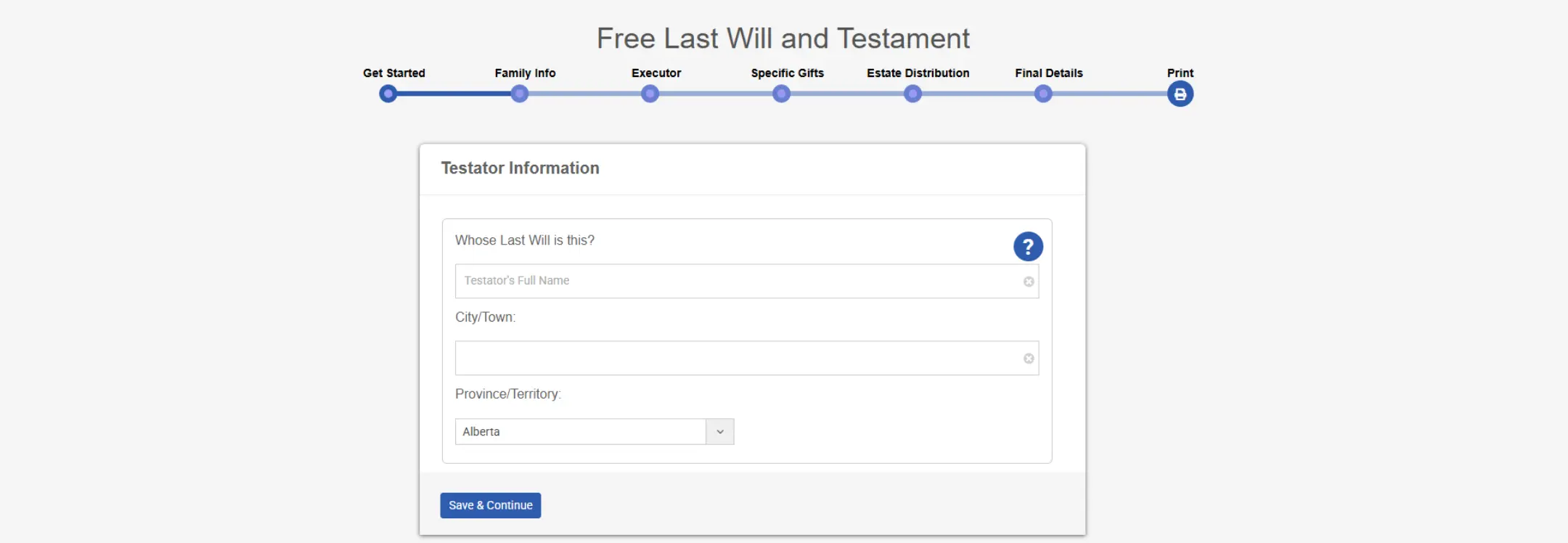
2. Answer Guided Questions
Complete the interactive questionnaire to customize your beneficiary designations and estate distribution preferences based on your unique situation.
3. Preview and Print
Review your generated document for accuracy and follow the provided instructions to sign and witness it correctly for official legal standing.
Naming Beneficiaries: Practical Tips
Properly naming your beneficiaries is one of the most important things you can do to ensure your Online Last Will and Testament is effective. It is not just about choosing the right people; it is about describing them in a way that leaves no room for doubt. Canadian courts look for the specific intent of the testator, and the more precise you are, the easier it is for your executor to carry out your wishes. Precision also protects your beneficiaries from potential challenges by other relatives who might feel they were overlooked.
You should also think about the practical impact of your gifts. For example, leaving a specific piece of real estate to multiple people can sometimes lead to disagreements about whether to sell or keep the property. In such cases, it might be better to leave the residue of the estate to be shared equally, allowing the executor to sell assets and distribute the cash. Taking the time to consider these dynamics can help maintain family harmony after you are gone.
Use Legal Names and Identifiers
The most frequent source of confusion in a will is the use of vague names or generic descriptions like "my children" or "my best friend." To avoid this, you should always use the full legal name of each beneficiary as it appears on their government identification. Including their current address and their relationship to you, such as "my niece, Sarah Jane Smith, of Calgary," provides additional layers of certainty that can prevent identity confusion.
If you are naming a charitable organization, you must be even more careful. many charities have similar names, and some may have different branches or local chapters. Always use the full legal name of the organization and include its charitable registration number provided by the Canada Revenue Agency. This ensures that your donation goes to the correct entity and that your estate receives the appropriate tax benefits.
Provide Alternates
Life is unpredictable, and there is always a chance that a beneficiary may pass away before you do. To prevent your gifts from failing or falling into a default government formula, you should always name at least one contingent beneficiary for every major asset. This is especially important for the residuary portion of your estate, which often contains the bulk of your wealth.
When providing alternates, you can name a specific individual or use phrases like "per stirpes," which indicates that a gift should pass to the deceased beneficiary's children. This keeps the inheritance within a specific branch of the family even if the first person is no longer there. Having a clear "Plan B" is one of the hallmarks of a well researched and professional estate plan.
Update Regularly
Your will should not be a static document that you write once and forget. Major life events such as marriage, divorce, the birth of a child, or the death of a named beneficiary should trigger an immediate review of your plans. In some provinces, certain life changes like a new marriage can actually revoke an existing will entirely. Keeping your document current ensures that it always reflects your actual relationships and priorities.
Even if your family situation remains the same, you should review your will every few years to account for changes in your financial situation or the laws themselves. For example, a person you named as a beneficiary ten years ago might now be financially independent, while someone else may have developed a greater need for support. Regular updates help you avoid the common Mistakes Last Will and Testament that lead to unintended consequences.
Coordinate With Non-Probate Assets
Many people forget that their Last Will and Testament Canada is only one part of their total estate plan. Assets like life insurance policies, RRSPs, and TFSAs often pass directly to named beneficiaries outside of the will. It is vital that the designations on these accounts match the intentions expressed in your will to avoid confusion or unfair distributions.
For example, if you leave your entire estate to your children in your will but have an old life insurance policy that still names an ex spouse as the beneficiary, the ex spouse will receive that money regardless of what the will says. Coordination is also important for tax purposes, as the estate is often responsible for the taxes on RRSP withdrawals even if the money goes directly to a named person. Ensuring all your designations work together is the best way to protect your heirs and your legacy.
Conclusion
Choosing your beneficiaries is a powerful way to shape your final legacy and provide security for your loved ones. By understanding the different categories of beneficiaries and the legal rights they hold, you can create a clear and effective plan that minimizes the risk of dispute. Using a trusted Online Last Will and Testament platform like Ziji Legal Forms ensures your document is compliant with Canadian laws and accounts for every detail of your estate. Regular reviews and careful coordination of your assets will ensure your final wishes are honored exactly as you intended.
Last Will and Testament FAQs
What is a Last Will?
A Last Will and Testament is a crucial legal document that empowers individuals to express their wishes regarding the distribution of their assets after death. Essentially, it serves as a comprehensive set of instructions, guiding an appointed executor through the process of executing the testator's desires after the testator’s passing.
This may sound complex but our customizable Last Will templates at Ziji Legal Forms will enable you to create a valid and comprehensive Last Will that covers various essential aspects:
-
Appointment of Executor: The testator can designate a trustworthy individual responsible for executing the instructions outlined in the Last Will.
-
Distribution of Assets: Specifies how the testator's estate and assets will be divided among beneficiaries, including specific bequests or inheritances.
-
Appointment of Guardianship of Minor Children: Allows the testator to designate a guardian to care for and protect minor children in the event of their death.
-
Appointment of Caretaker of Pets: Permits the testator to assign someone responsible for the care of their pets after they pass away.
-
Debts and Taxes: Addresses the payment of outstanding debts, taxes, and funeral expenses before distributing assets to beneficiaries.
-
Last Requests: Allows the testator to outline final instructions regarding funeral preferences or the forgiveness of debts owed to them.
Why having a Last Will so important?
Having a Last Will is crucial for individuals who want control over the distribution of their assets after death. Any adult of sound mind can and should create a Last Will to dictate how their estate is to be handled after death. When some dies without a valid will, also know as dying intestate, laws of your jurisdiction would dictate asset distribution, potentially leading to unintended consequences. A Last Will ensures that assets are distributed according to the testator's wishes, preventing confusion or disputes among surviving family members.
Is a Last Will Different from a Living Will?
Yes, a Last Will focuses on asset distribution after death, while a Living Will addresses health care preferences when the individual is incapacitated. A Living Will guides family members on medical treatments the individual would accept if unable to provide consent, such as CPR, blood transfusions, or decisions related to starting and ending life support.
Key Terminology in a Last Will:
-
Testator: The individual writing the will. Sometimes a testatrix is used to refer to a female testator but a testator is the commonly used term to refer to both female and male testators.
-
Executor: The person responsible for executing the testator's wishes as appointed in the Last Will.
-
Guardian: A person designated to care for minor children in case of the testator's death.
-
Executor Bond: A bond that ensures beneficiaries are reimbursed if the executor mishandles assets.
-
Trustee: Manages and administers trust assets for minor children until they reach adulthood.
-
Specific Gift: A designated, specific property bequeathed to a beneficiary in the will. Please note that assets that already have a designated beneficiary cannot be given in a Last Will. Examples of this are pension fund proceeds, life insurance policy, annuities etc.
-
Wipeout Clause: Redirects assets to a specified beneficiary if named beneficiaries and heirs die before the testator. This can also be referred to as a total failure clause, total wipe out clause, common tragedy clause, catch all clause, fail safe clause etc., in a Last Will.
Can pets be mentioned in a Last Will?
A Last Will can be used to ensure the well-being of pets by designating a caretaker and allocating a portion of the estate for their care, covering food, grooming, and medical needs.
Do I need to notarize my Last Will and what about witness requirements?
In most jurisdictions, notarization isn't required, but two witnesses are essential. Witnesses must be of sound mind, at least 18 years old, and not beneficiaries in the Last Will. Their presence during the testator's signing of the document ensures its validity. While not mandatory, notarization can expedite the probate process in the courts.
What is probate?
Probate is the legal process overseen by the court where your Will is validated and executed after your death.
What is an affidavit and why is it often signed with the Will?
An affidavit, also known as an affidavit of execution, is a sworn statement confirming that the signing and witnessing of the Will comply with local laws. By signing and notarizing this affidavit, the Will becomes "self-proved" in probate, meaning its validity is typically accepted without further proof unless contested with credible evidence.
Why is it wise to sign an affidavit with the Will?
If the affidavit isn't signed, witnesses may need to appear in probate court to confirm their roles and the signing process. While not mandatory for a valid Will, signing the affidavit saves time and costs during probate. It also spares the executor from tracking down witnesses later.
Where should you store your Will?
Keep your signed Will and Affidavit in a secure place. Avoid using a safety deposit box as your sole storage, as accessing it requires going through probate, where the Will is needed. Store these documents securely yet accessibly for your executor, and inform them of their location.
How frequently should I revise my Last Will?
It is advisable to review and update your Last Will periodically, such as every few years, or whenever you experience a significant life event like marriage, divorce, the birth of a child, or acquiring significant assets. This ensures that your Will stays accurate and aligns with your current intentions.
Is an online Last Will legally binding?
Yes, an online Last Will can be legally binding if it meets your jurisdiction's legal requirements, including proper signing and witnessing. At Ziji Legal Forms, our templates are crafted by our legal experts to comply with legal standards, ensuring the validity of your Will.
Can I appoint alternate executors in my Will?
Yes. You can designate one or more alternate executors to take over if your primary executor is unable or unwilling to act. This ensures your estate is administered smoothly without delays and provides backup options in case of unforeseen circumstances.
Can I leave provisions for stepchildren or children from a blended family?
Absolutely. You can include stepchildren, adopted children, or other non-biological children as beneficiaries in your Will. Be sure to clearly identify each child and specify what they are to receive to avoid confusion or disputes.
Can I include my digital assets in my Will?
Yes. Digital assets, including online accounts, social media profiles, cryptocurrency, digital photos, or cloud files, can be addressed in your Will. Clearly outline instructions for access, management, or distribution to ensure your wishes are honored.
Can I make charitable donations in my Will?
Yes. You can leave gifts or a portion of your estate to registered charities, nonprofits, or organizations that are meaningful to you. Include the charity’s full legal name and the intended amount or asset to ensure your philanthropic wishes are followed.
What happens if I die without a Will in Canada?
If you pass away intestate—without a valid Will—provincial or territorial laws will determine how your estate is distributed. This may not reflect your personal wishes and could lead to disputes among family members. In some cases, if no legal heirs exist, assets may ultimately revert to the Crown.
What jurisdictions can use our Last Will?
You can use our template to create a legal and valid Last Will for the following jurisdictions:
|
Alberta
British Columbia
Manitoba
New Brunswick
Newfoundland and Labrador
Northwest Territories
Nova Scotia
Nunavat
Prince Edward Island
Saskatchewan
Yukon |
AB
BC
MB
NB
NL
NT
NS
NU
PE
SK
YT |





 Canada
 United States