TL;DR- The Independent Contractor Agreement serves as a fundamental commercial contract that establishes a business to business relationship rather than an employer to employee dynamic in the Canadian market.
- Canadian legal standards prioritize the actual reality of the working relationship over the formal labels used in a document to determine the status of a worker for tax and liability purposes.
- Misclassification of workers as independent contractors can trigger severe financial penalties including retroactive Canada Pension Plan and Employment Insurance contributions plus significant interest.
- Under the Canadian Copyright Act the independent contractor remains the first owner of any intellectual property created unless a written agreement explicitly assigns those rights to the hiring party.
- Canadian law recognizes a unique category known as the dependent contractor who is entitled to reasonable notice or severance pay if the working relationship is terminated without cause.
- Contractors must manage their own tax obligations and are generally required to register for a Goods and Services Tax or Harmonized Sales Tax number once they exceed 30,000 dollars in annual revenue.
- Recent federal updates to the Canada Labour Code have created a legal presumption that workers are employees unless the hiring entity can provide evidence to the contrary.
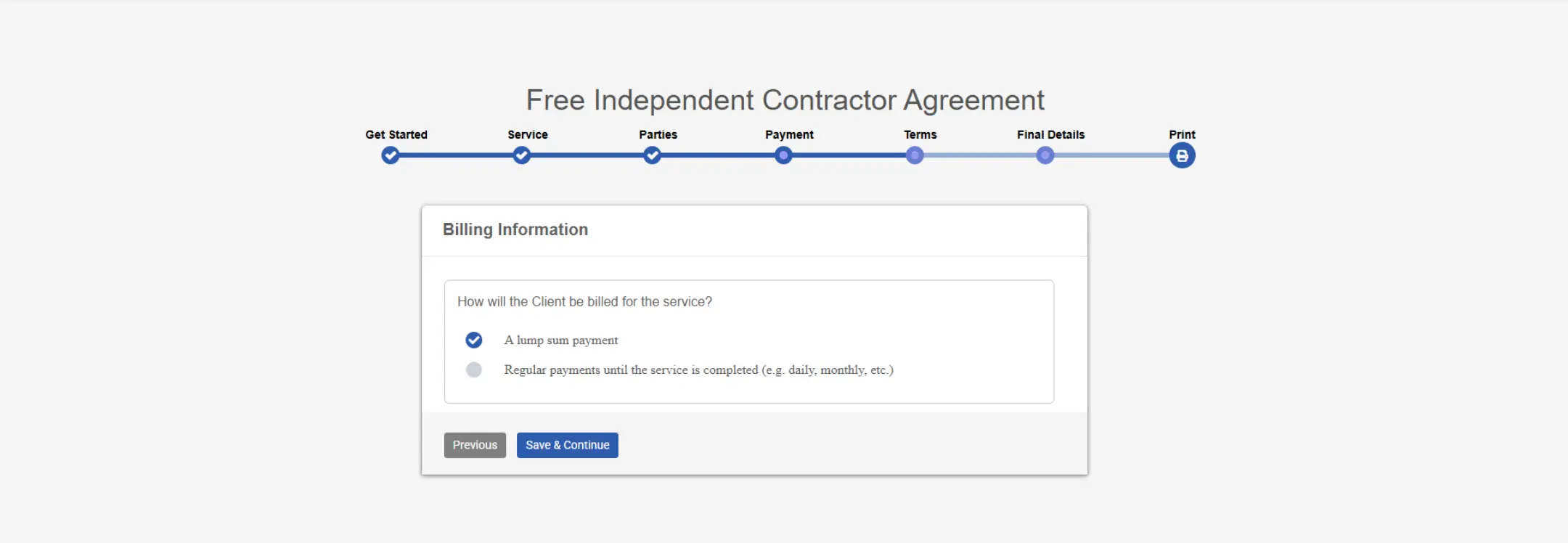
- A walkthrough on how to create a custom independent contractor agreement using Ziji Legal Forms.
What Is an Independent Contractor Agreement?
An Independent Contractor Agreement represents a specialized legal instrument designed to govern the professional engagement between a client and a self-employed service provider. In the context of the Canadian legal system this document is frequently referred to as a contract for services. This terminology is critical because it distinguishes the arrangement from a contract of service which is the standard definition for an employment relationship. The primary function of this agreement is to outline the specific results or deliverables that a contractor must provide while acknowledging their operational independence.
The document functions as a commercial roadmap that defines the rights and obligations of both parties within a business to business framework. Unlike an employment contract where the hirer maintains a high degree of control over how the work is performed the Independent Contractor Agreement emphasizes the autonomy of the service provider. The contractor is expected to use their own methods and expertise to achieve the objectives stated in the agreement without being integrated into the core organizational hierarchy of the hiring company. This distinction is vital for maintaining the legal and financial boundaries that define modern freelance and consulting engagements in Canada.
The Legal Framework of Contract for Services
In Canada the legal framework for these agreements is rooted in both common law principles and federal statutes such as the Canada Labour Code and the Income Tax Act. The courts examine the overall relationship to ensure that it aligns with the characteristics of a business partnership rather than traditional employment. This involves analyzing whether the worker has the opportunity to profit from their efficiency and whether they bear the financial risk of loss. An Independent Contractor Agreement formally declares the intention of the parties to operate at an arm's length distance which is a key factor during any regulatory audit.
Distinguishing Commercial Contracts from Employment
The distinction between a commercial contract and an employment relationship carries profound implications for statutory protections. Genuine independent contractors are not covered by provincial employment standards acts which govern matters like minimum wage and overtime pay and vacation entitlements. Consequently the Independent Contractor Agreement must be drafted with precision to ensure it does not accidentally include language that suggests a relationship of subordination. The focus remains on the delivery of a specific project or service for a set price rather than the ongoing provision of labor under the direction of a supervisor.
Why Independent Contractor Agreements Are Important?
Clear expectations
Establishing clear expectations is the most effective way to prevent professional friction and ensure project success. A written agreement serves as a definitive record of the project scope which helps to prevent the phenomenon known as scope creep. When a contractor and client have a detailed description of the tasks to be performed there is less room for misunderstanding regarding what constitutes a finished product. This clarity allows both parties to plan their resources and timelines with a high degree of confidence.
Preventing Misunderstandings in Deliverables
The agreement provides a structured format for identifying exactly what the contractor is responsible for producing. By defining the milestones and final deliverables the document ensures that the client knows what they are paying for and the contractor knows when their obligations are fulfilled. This formalization of expectations is especially important in complex technical or creative projects where the definition of done can be subjective.
Establishing Accountability and Timelines
A well-defined agreement also sets specific timelines for the completion of various project phases. This creates a sense of accountability and allows the client to coordinate the contractor's output with other internal or external business activities. When deadlines are clearly stated in a legal document they carry more weight than verbal assurances which helps to keep the project on track.
Legal protection
Legal protection is a cornerstone of any professional business relationship in the Canadian market. An Independent Contractor Agreement functions as a shield that protects both parties from the unpredictability of legal disputes. By detailing the terms of the engagement the agreement minimizes the risk of a party making unfounded claims about the nature of the work or the terms of payment. In the event of a disagreement the written contract serves as the primary evidence of the original arrangement.
Mitigating Risks of Litigation
A comprehensive agreement includes clauses that address potential areas of conflict such as liability and indemnification. These provisions allocate risk between the parties and define who is responsible for specific losses or damages. This proactive approach to risk management can save thousands of dollars in legal fees by providing a clear path for dispute resolution before a situation escalates to a courtroom.
Ensuring Statutory Compliance
The agreement also ensures that both parties are aware of their legal obligations under Canadian law. This includes compliance with tax regulations and safety standards and intellectual property statutes. By formalizing these requirements in the contract the parties demonstrate their commitment to operating within the legal boundaries of their respective industries.
Payment assurance
Payment assurance is a vital concern for every independent contractor operating as a small business owner. The agreement provides a legally enforceable guarantee that the contractor will be paid the agreed amount for their services. This is a critical departure from employment where pay is often guaranteed by statute regardless of a formal contract. For a contractor the agreement defines the commercial debt that the client owes upon the delivery of the services.
Defining Payment Structures and Rates
The contract specifies the exact payment structure whether it is an hourly rate or a fixed fee or a milestone based arrangement. This level of detail prevents disputes over how much is owed and when the payment should be made. By clearly outlining the financial terms the agreement ensures that the contractor can manage their cash flow effectively.
Establishing Invoicing and Collection Procedures
In addition to the rates the agreement describes the process for submitting invoices and the timeframe for payment. This professionalizes the collection process and provides the contractor with a formal mechanism to follow up on late payments. For the client it provides a predictable schedule of expenditures which is essential for effective budget management.
Intellectual property security
Intellectual property security is one of the most significant reasons to have a written agreement in Canada. The Canadian Copyright Act establishes that the creator of a work is the first owner of the copyright unless an employment relationship exists. Because independent contractors are not employees they retain ownership of their creations by default. A written agreement is the only way for a business to legally acquire the rights to the work product they have commissioned.
Overriding Default Ownership Rules
Without a written assignment of rights the business may only have a limited license to use the contractor's work. This can prevent the business from modifying the work or sublicensing it or fully commercializing it in the future. The Independent Contractor Agreement overrides the default rules by including specific language that transfers ownership to the hiring company upon the creation of the work.
Protecting Commercial Assets and Innovations
For many modern businesses their most valuable assets are their intellectual property. Ensuring that these assets are fully owned by the company is essential for maintaining a competitive advantage and attracting investment. A robust agreement provides the legal certainty needed to protect these innovations from being used by competitors or reclaimed by the contractor at a later date.
Managing changes
Managing changes is an inevitable part of long term projects and the agreement provides a framework for handling modifications. As a project evolves the parties may need to adjust the timelines or the scope of work or the compensation. A formal agreement ensures that these changes are documented and agreed upon in writing which prevents one party from unilaterally altering the deal.
Implementing Formal Amendment Processes
The contract typically includes a clause that requires any amendments to be made in writing and signed by both parties. This creates a clear paper trail for every change and ensures that there is no confusion about the current terms of the engagement. By following a formal process the parties maintain the integrity of the original agreement while allowing for necessary flexibility.
Avoiding Disputes Over Modified Terms
Disputes often arise when parties rely on verbal agreements to change the scope of a project. A written agreement minimizes this risk by providing a reference point for all agreed modifications. This ensures that the contractor is fairly compensated for any additional work and the client receives the extra value they have requested.
Confidentiality
Confidentiality is essential when a contractor has access to a client's sensitive business information. Many projects require the contractor to handle trade secrets or client lists or proprietary data that could harm the business if disclosed. The Independent Contractor Agreement includes non disclosure provisions that legally bind the contractor to keep this information secret.
Safeguarding Trade Secrets and Proprietary Data
The confidentiality clause defines what information is considered private and prohibits the contractor from sharing it with third parties. This protection is vital for maintaining the client's market position and protecting their internal operations. By including these terms in the agreement the client gains a legal remedy if the contractor breaches their trust.
Maintaining Professional Integrity
Confidentiality provisions also help to establish a professional standard for the working relationship. They encourage the contractor to handle all client information with care and respect. This build's trust between the parties and allows for a more open exchange of information which is often necessary for the successful completion of the project.
Misclassification protection
Misclassification protection is arguably the most critical function of a Canadian Independent Contractor Agreement. Government agencies such as the Canada Revenue Agency are focused on ensuring that workers are correctly classified for tax and benefit purposes. If a worker is found to be an employee the hiring company can face massive liabilities for unpaid taxes and statutory contributions.
Demonstrating the Intent of the Parties
The agreement serves as the primary evidence of the parties' intention to enter into a business relationship rather than an employment relationship. While the government looks at the actual reality of the work the written contract is the first document they will review during an audit. A well drafted agreement highlights the indicators of independence such as the contractor's control over their schedule and their provision of their own tools.
Mitigating Financial Liabilities and Penalties
By clearly defining the contractor as an independent operator the agreement helps to mitigate the risk of a reclassification. This protects the hiring company from the financial burden of retroactive Canada Pension Plan and Employment Insurance premiums. It also clarifies that the contractor is responsible for their own tax remittances which is a key requirement for maintaining an arm's length relationship under Canadian law.
Key Elements to Include in an Independent Contractor Agreement
Parties Involved (Identification of the Parties)
The identification of the parties is the foundational step in creating an enforceable agreement. This section must accurately reflect the legal names of the individuals or business entities entering into the contract. In Canada it is common for contractors to operate through a corporation or a registered sole proprietorship. Using the full legal name of the business entity ensures that the contract is between two distinct commercial organizations.
Using Legal Business Names and Addresses
It is essential to include the registered business addresses for both the client and the contractor. This information is necessary for tax reporting and for determining the appropriate legal jurisdiction if a dispute arises. For incorporated contractors the agreement should also include the federal or provincial corporation number to verify the existence of the entity.
Identifying Business and Tax Numbers
Including the contractor's Business Number and their Goods and Services Tax number is a standard practice in Canadian agreements. This provides the client with the information needed to verify the contractor's status with the Canada Revenue Agency. It also ensures that any tax related documentation such as the issuance of T4A slips can be handled accurately and efficiently at the end of the fiscal year.
Scope of Work
The scope of work is a detailed description of the services the contractor is hired to perform. This section should be as specific as possible to avoid any ambiguity regarding the contractor's responsibilities. In a Canadian context a detailed scope of work also helps to differentiate the contractor from an employee by focusing on a specific project rather than general ongoing duties.
Defining Deliverables and Milestones
A high quality scope of work breaks the project down into specific deliverables and milestones. This allows the client to monitor progress and provides clear criteria for determining when a project phase is complete. By focusing on results the agreement reinforces the contractor's independence and their responsibility for the final outcome of the work.
Outlining Quality Standards and Specifications
The agreement should also include any technical specifications or quality standards that the contractor must meet. This ensures that the final product meets the client's expectations and provides a basis for refusing payment if the work is substandard. Defining these standards upfront reduces the likelihood of subjective disagreements later in the project.
Term and Termination
The term and termination section defines the life cycle of the agreement. It specifies when the work will begin and when the contract will naturally expire. In Canada the termination provisions are particularly important because of the legal concept of reasonable notice. If an agreement does not specify a termination notice period a court might imply one which can lead to unexpected costs for the hiring company.
Establishing Start and End Dates
The agreement must clearly state the commencement date and the expected completion date of the services. For some projects the end date might be linked to the successful delivery of the final product rather than a specific calendar date. This provides the flexibility needed to manage projects that may experience unforeseen delays.
Defining Notice Periods and Termination for Cause
The termination clause should outline how much notice either party must provide to end the agreement early without cause. It should also include a provision for termination for cause which allows a party to end the contract immediately if the other party commits a serious breach. These terms provide a structured way to exit the relationship while minimizing the risk of a claim for wrongful termination or breach of contract.
Compensation and Payment Terms
Compensation terms are the central financial component of the agreement and must be articulated with precision. This section explains how much the contractor will be paid and what conditions must be met to trigger a payment. In the Canadian market the agreement must also account for the application of federal and provincial sales taxes.
Detailing Payment Amounts and Schedules
The contract should state whether the contractor is paid by the hour or by the project or upon the completion of specific milestones. It should also specify the frequency of invoicing such as monthly or biweekly. By providing a clear schedule the agreement helps both parties manage their finances and ensures that there is a mutual understanding of the payment obligations.
Addressing GST and HST Obligations
Many Canadian contractors are required to charge the Goods and Services Tax or the Harmonized Sales Tax on their services. The agreement should explicitly state whether the quoted price includes or excludes these taxes. It is standard for the contractor to provide their tax registration number on every invoice which allows the client to claim input tax credits for the taxes paid.
Expenses and Reimbursements
The handling of expenses is a key indicator of the contractor's independent status. In a genuine business relationship the contractor typically bears the costs associated with performing the work as part of their business risk. However there may be specific instances where the client agrees to reimburse the contractor for certain out of pocket costs.
Identifying Reimbursable vs Non Reimbursable Costs
The agreement should clearly list which expenses are eligible for reimbursement and which are the sole responsibility of the contractor. This often includes travel costs or materials or specialized software purchased specifically for the project. By defining these boundaries the parties avoid disputes over unexpected costs and maintain the integrity of the original budget.
Setting Approval Processes for Expenditures
For expenses that are reimbursable the agreement should require the contractor to obtain written approval from the client before incurring the cost. This gives the client control over their spending and ensures that all expenses are necessary for the completion of the project. The agreement should also specify the requirement for original receipts to support any reimbursement claim.
Independent Contractor Status (Relationship of the Parties)
The relationship clause is the most direct way to define the status of the worker within the agreement. It explicitly states that the contractor is an independent operator and not an employee or agent of the company. This section is vital for clarifying the legal boundaries of the engagement and protecting the parties from the implications of an employment relationship.
Disclaiming Employment and Agency Relationships
This clause clarifies that the contractor does not have the authority to bind the company to legal agreements or represent themselves as an employee. It also states that the contractor is not entitled to any company benefits such as health insurance or pension plans or paid time off. This distinction is fundamental for maintaining the arm's length nature of the commercial arrangement.
Allocating Responsibility for Taxes and Benefits
A key part of the status clause is the acknowledgement that the contractor is solely responsible for their own tax remittances. This includes the payment of income tax and both the employer and employee portions of Canada Pension Plan contributions. By formalizing this responsibility the agreement reinforces the contractor's position as a self employed business entity in the eyes of the government.
Confidentiality and Non-Disclosure
Confidentiality provisions are designed to protect the client's competitive secrets and private information. In the modern business world data is often a company's most sensitive asset and its protection is a top priority. The Independent Contractor Agreement creates a legal obligation for the contractor to maintain the secrecy of all confidential information they encounter.
Defining Confidential Information Broadly
The agreement should include a broad definition of confidential information to ensure that all sensitive data is covered. This can include trade secrets and customer data and financial records and internal business strategies. By clearly identifying what information is protected the agreement provides a high level of security for the client's operations.
Establishing Survival of Confidentiality Obligations
It is standard for confidentiality obligations to continue even after the agreement has terminated. This ensures that the contractor cannot use the client's secrets for their own benefit or share them with a competitor in the future. The survival of these clauses is essential for protecting the long term value of the company's proprietary information.
Intellectual Property and Work Product Ownership
Ownership of intellectual property is a complex area of Canadian law that must be addressed with specific language. Under the Copyright Act an independent contractor is the first owner of any work they produce unless they assign those rights to someone else in writing. This makes the intellectual property clause one of the most important sections for any business hiring a contractor.
Assigning Rights to the Hiring Company
The agreement should state that the contractor irrevocably assigns all rights and title and interest in the work product to the company. This transfer of ownership should occur automatically upon the creation of the work or upon the final payment. By securing these rights the company ensures that it has full control over the assets it has paid for.
Including Waivers of Moral Rights
In Canada moral rights are personal rights held by the author that cannot be assigned or sold. They include the right to the integrity of the work and the right to be credited as the author. To ensure the company has total freedom to modify and use the work the agreement must include a written waiver of these moral rights by the contractor. This is a unique requirement of Canadian law that is essential for full intellectual property protection.
Liability and Indemnification
The liability and indemnification section is used to manage the financial risks associated with a breach of contract or professional negligence. It defines who is responsible for paying for losses or damages that occur during the course of the project. This is a standard feature of commercial contracts that protects the parties from the actions of the other.
Allocating Risk Through Indemnity Clauses
An indemnity clause requires one party to compensate the other for specific types of losses. For example the contractor may agree to indemnify the client for any losses caused by the contractor's failure to follow safety regulations or their infringement of a third party's intellectual property. This protects the client from being held financially responsible for the contractor's mistakes.
Specifying Insurance Requirements
The agreement may also require the contractor to maintain certain types of insurance such as professional liability or general commercial liability coverage. In many provinces it is also necessary for contractors to have coverage through the local workers' compensation board. These insurance requirements ensure that there are funds available to cover any potential claims and provide an extra layer of financial security for the client.
Governing Law and Other Boilerplate Terms
Boilerplate terms are the standard legal clauses that govern how the contract will be interpreted and enforced. While they may seem routine they are essential for providing a clear legal framework for the relationship. The most important of these is the governing law clause which specifies which province's laws will apply to the agreement.
Selecting Jurisdiction and Venue
The agreement should state which provincial courts will have the authority to hear any legal disputes. This provides certainty and allows the parties to prepare for any potential litigation in a familiar legal environment. Selecting the appropriate jurisdiction is vital for ensuring that the contract is interpreted according to the rules that both parties intended.
Including Entire Agreement and Severability Clauses
The entire agreement clause states that the written contract is the final and complete record of the deal and supersedes all previous discussions. This prevents a party from claiming that there were other verbal promises that were not included in the document. The severability clause ensures that if one part of the contract is found to be invalid the rest of the agreement remains legally binding.
Signatures
The signatures of the parties are the final act that brings the agreement into legal force. In Canada both physical and electronic signatures are recognized as valid and binding. By signing the document the parties confirm that they have read and understood the terms and agree to be bound by them.
Executing the Agreement Properly
It is important to ensure that the people signing the agreement have the legal authority to bind their respective organizations. For corporations this usually means an officer or director of the company. Having properly executed signatures is essential for proving the validity of the contract if it is ever challenged in a legal proceeding.
Maintaining Copies for Records
Each party should receive a fully signed copy of the agreement for their permanent records. These documents are vital for tax purposes and for managing the ongoing relationship between the parties. Keeping a clear record of the agreement ensures that both the client and the contractor can easily refer to the terms of their engagement whenever necessary.
How to Create an Independent Contractor Agreement with Ziji Legal Forms
1. Choose template
2. Add Services Information
Describe the exact services and deliverables expected from the contractor to establish clear professional boundaries for the project.
3. Add Parties Information
Enter the legal business names and identification numbers for both the hiring party and the contractor to formalize the business relationship.
4. Add Payment and Terms Information
Specify the compensation rates and invoicing schedules along with the total duration and termination notice periods for the contract.
5. Preview and Print
Review the final document for accuracy before downloading and printing the professional agreement for execution by both parties.
Why Use Ziji Legal Forms for Your Independent Contractor Agreement?
Created by legal experts
The quality of a legal form is determined by the expertise of the people who created it. Ziji Legal Forms are developed by professionals who have a deep understanding of the Canadian legal landscape and the specific requirements for independent contractor arrangements. This ensures that every document is drafted with precision and includes the necessary language to protect your business from common risks. By using forms created by experts you can be confident that your agreements will stand up to legal scrutiny.
Leveraging Professional Legal Knowledge
Professional legal knowledge is essential for navigating the complexities of the Canadian Copyright Act and the Income Tax Act. Ziji forms incorporate these specialized rules to ensure that your intellectual property is secure and your tax obligations are clearly defined. This level of detail is rarely found in generic templates and provides a significant advantage for businesses operating in Canada.
Ensuring Language Precision
The language used in a legal document must be clear and unambiguous to be effective. Legal experts understand how to use specific terminology to achieve a desired legal result such as the assignment of rights or the creation of an indemnity. This precision minimizes the risk of a court interpreting your agreement in a way that you did not intend which is vital for effective risk management.
Comprehensive and up-to-date
The legal environment is constantly changing and a contract that was effective a few years ago might not meet today's standards. Ziji Legal Forms are continuously monitored and updated to reflect the latest changes in Canadian legislation and case law. This commitment to staying current ensures that you are always using the most effective legal tools available.
Easy to use, guided experience
Creating a professional legal agreement does not have to be a complicated or stressful process. Ziji offers a guided experience that walks you through each step of the creation process. By answering a few simple questions you can generate a custom agreement that is tailored to your specific needs without needing any specialized legal training.
Time-saving
Time is one of the most valuable resources for any business owner and Ziji helps you save it. Instead of spending hours researching legal requirements or drafting a contract from scratch you can produce a professional agreement in a matter of minutes. This efficiency allows you to onboard contractors faster and keep your projects moving forward without delay.
Eliminating Manual Drafting Errors
Manual drafting is not only time consuming but also prone to errors that can have serious legal consequences. Ziji eliminates this risk by using standardized templates that have already been vetted by legal experts. This ensures that all the necessary clauses are included and that the formatting is consistent and professional every time.
Customizable output
Every business relationship is unique and your legal documents should reflect that. Ziji allows you to customize your Independent Contractor Agreement to suit the specific requirements of each project. Whether you need to add specialized confidentiality terms or adjust the payment schedule the platform provides the flexibility you need.
Creating Clear and Readable Documents
Good formatting is not just about aesthetics it is also about clarity and readability. Ziji uses a logical structure with clear headings and numbered paragraphs to make your agreements easy to navigate. This ensures that both parties can quickly find the information they need and reduces the likelihood of misunderstandings.
Affordability
Hiring a lawyer to draft a custom agreement can be extremely expensive and is often not a practical option for small and medium sized businesses. Ziji offers an affordable alternative that provides the same level of protection as a professionally drafted contract at a fraction of the cost. This makes high quality legal protection accessible to everyone.
Conclusion
A well drafted Independent Contractor Agreement is essential for maintaining a compliant and productive business relationship in the Canadian market. It provides a clear legal framework that protects your company from the risks of misclassification and secures your valuable intellectual property. By utilizing professional tools like Ziji Legal Forms you can efficiently create robust agreements that safeguard your interests and support the growth of your business.
Independent Contractor Agreement FAQs
What else can an independent contractor agreement be called?
An independent contractor agreement can also be referred to as follows: consulting service agreement, general service agreement, service agreement, or service contract.
What’s an independent contractor agreement?
An independent contractor agreement is a document used to outline the terms of service between the contractor and the client. Independent contractor agreement is used instead of an employment agreement because the independent contractor is not an employee of the client.
How does an employment agreement differ from an independent contractor agreement?
An employment agreement is only used for employees. In all jurisdictions, the employer and employee relationship has tax implications and statutory standards for both parties so an independent contractor agreement should not be used for employees. Independent contractors are freelancers, not employees, and generally differ from employees in having more control over how the work is performed when the service is rendered, unlike employees who are under more direct control and supervision of the employer. The contractor is independent service provider and the independent contractor agreement will reflect this difference.
When to use an independent contractor agreement?
There are many examples of services that can be covered under an independent contractor agreement, for example:
- Information technology service provider
- Web designer
- Construction and home renovation worker such as carpenter, electrician, plumber and landscaper
- Child care worker such as nanny, babysitter, daycare worker
- Educational and instructional provider such as personal fitness trainer, music teacher, and dance instructor
- Caterer
- Decorator
- Photographer
- Musician and DJ (disc jockey)
- Cleaner
- Tax consultant
What should be covered in an independent contractor agreement?
The independent contractor agreement should cover the terms of the services that will be provided so both the contractor and client will know what is expected. Some topics that should be included in the independent contractor agreement are as follows:
- Who are the parties: listing the full name and address of the independent contractor and the client.
- How long is the term: listing how long the contract will last. It can have a fixed term that has an end date or it can continue indefinitely as an ongoing service.
- What kind of work or service will be provided: listing the services the contractor will be providing in detail so both parties will be clear as to what is expected.
- How much is the payment and what is the payment method: listing the cost associated with the service provided. It can be a lump sum payment or a periodic payment. Also describe what type of payment methods will be used to pay the contractor.
- What are the terms of the agreement: listing the terms the parties have agreed to in the independent contractor agreement, dealing with topics such as initial deposit, late payment and interest payment, work expense reimbursement, and contract termination.
- Will there be a confidentiality clause: describing if the contractor will be prevented from sharing sensitive business information or trade secret of the client.
- Will there be an intellectual property clause: describing if the service provided will create any intellectual property, and if so, whether the contractor or the client will own said intellectual property rights that is generated from the agreement.
Can the terms of an independent contractor agreement be modified after signing?
Yes. Any adjustments must be mutually agreed upon by the contractor and the client. To ensure the changes are valid and clearly understood, they should be recorded in writing and signed by both parties.
Do I need a written independent contractor agreement?
In some areas, verbal agreements may be legally recognized, but a written contract is strongly preferred. Putting the terms in writing makes each party’s obligations and expectations clear, which helps prevent confusion and reduces the likelihood of disputes.
What are the consequences if the agreement is breached?
If the contractor or the client fails to uphold their part of the deal, it could be considered a breach of contract. Depending on the situation and applicable law, the other party may have the right to seek compensation, terminate the agreement, or require the original terms to be honored.
How should payment be addressed in the agreement?
The contract should clearly outline the payment structure—whether it’s a one-time fee, hourly rate, or payments tied to specific milestones. It should also detail the payment method and any extra provisions, such as deposits, late payment charges, or expense reimbursements.
Must the agreement comply with local regulations?
Yes. The contract must adhere to the laws in the location where the services are provided. Any term that conflicts with mandatory legal requirements—such as licensing obligations, tax rules, or workplace safety standards—will usually be invalid.
What jurisdictions can use our independent contractor agreement?
You can use our template to create a legal and valid independent contractor agreement for the following jurisdictions:
|
Alberta
British Columbia
Manitoba
New Brunswick
Newfoundland and Labrador
Northwest Territories
Nova Scotia
Nunavat
Prince Edward Island
Saskatchewan
Yukon |
AB
BC
MB
NB
NL
NT
NS
NU
PE
SK
YT |






 Canada
 United States